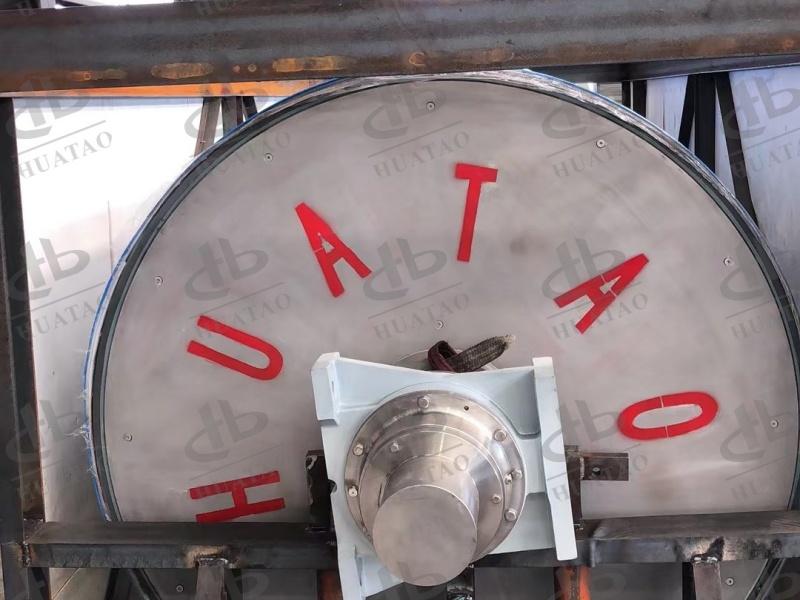
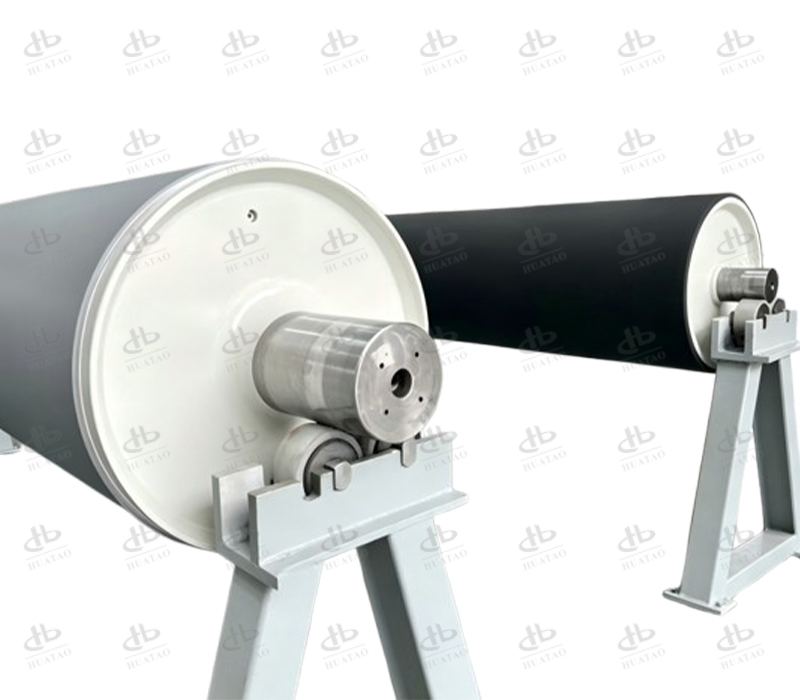
1 Overview of Winding Core and Pope Reel Roll The winding core, also named pope reel roll, serves as the core rotary component in the take-up section of film and papermaking production lines. It bears the highest linear running speed among all equipment rolls on the whole production line, with a maximum operating linear velocity reaching 3000 m/min. The main body of the product is made of seamless steel pipe, and two surface treatment schemes of hard chrome electroplating and elastic rubber coating are provided for customers to select, which can fully match the production demands of plastic film and papermaking industries. 2 Two Main Product Series and Technical Specifications 2.1 Heavy-Duty Steel Winding Cores for Biaxial Film Production This series of steel winding cores is customized for winding procedures of BOPP, BOPET, BOPA and capacitor films, with ultra-wide customizable dimensions and strict precision control standards. Customizable length range: 30 mm to 15000 mm Maximum outer diameter: Φ2000 mm Applicable spindle rotating speed: 20 rpm to 3000 rpm Single product weight range: 20 kg to 40000 kg Straightness tolerance: 0.02 mm/m to 0.2 mm/m Radial runout and end face runout: controlled within 0.02 mm to 0.2 mm Dynamic balancing standard: fully compliant with ISO1940 international specification Each steel winding core will undergo internal boring processing to balance the wall thickness distribution, so as to eliminate structural defects such as long-term bending deformation. Hard chrome plating is the preferred surface treatment solution for BOPET and capacitor film production workshops. The hardened surface can maintain scratch-free state after long-term repeated slitting and winding work, effectively extending the service cycle of the roll. Common standard sizes of film winding cores include 450×7200mm, 550×6700/7400/7600/8200/8600mm, 655×9200/9600mm, 800/850×11200mm. 2.2 PU Pope Reel Rolls for Papermaking Equipment The pope reel roll adopts friction winding structural design and is specially developed for various continuous paper production lines. Two PU surface types are designed to adapt to different production line speed standards. 1.Grooved PU pope reel roll The surface groove design can effectively improve friction coefficient and accelerate air exhaust between paper layers during winding, which is the matching roll for high-speed papermaking machines. 2.Smooth non-groove PU pope reel roll The simple smooth surface structure is suitable for medium and low-speed papermaking production lines with ordinary winding tension requirements. 3 Customized Matching Service Introduction The company can provide targeted customized manufacturing schemes for manufacturers with different production demands. For enterprises producing biaxial films and capacitor films, high-precision steel winding cores with complete specifications can be supplied; for factories producing tissue paper, kraft paper, printing paper and fluting paper, matched PU pope reel rolls are available. The team has accumulated more than 18 years of service experience in global film and papermaking industries, and can provide one-stop equipment matching technical support for customers. Contact Information Jenny Liu Mobile / WhatsApp: +86 17743789775 Email: sale05@huataogroup.com
Read More
1 Preface The MDO longitudinal stretching section is the core processing segment that determines the flatness, thickness uniformity and overall quality of biaxial oriented plastic films. As the key pressure-bearing component inside this working area, MDO nip rolls directly affect the consistency of film stretching under high-temperature operating conditions. This paper focuses on high-precision silicone-coated MDO nip rolls that match mainstream international film stretching equipment brands, and systematically sorts out product advantages, two dedicated product series and flexible structural schemes for reference by film production engineers and procurement personnel. 2 Core Performance Advantages of Silicone MDO Nip rolls All MDO nip roll products adopt imported high-temperature resistant silicone rubber as the surface cladding material, with multiple irreplaceable industrial comprehensive performance indicators. The products are manufactured according to ultra-precision machining standards, featuring stable high-temperature resistance, excellent elastic recovery ability, and no permanent deformation after long-term continuous compression work. This series of rolls can be perfectly matched with complete production lines manufactured by well-known brands including Bruckner, Mitsubishi, DMT and Dornier, and have provided stable and continuous processing performance for a large number of film manufacturing enterprises all over the world. 3 Two Specialized MDO Nip roll Product Series Two targeted product lines are developed respectively for BOPP and BOPET film production lines, with independent dimension specifications and complete technical indicators to adapt to different stretching technological standards. 3.1 MDO Nip roll for BOPP Film Production Lines Available standard dimensions: 130×1220mm / 130×1420mm / 130×1500mm, 150×1000mm / 150×1300mm, 110×890mm, and special DMT matching model 150×1200mm / 150×1400mm Complete technical indicators: Surface cladding material: high-performance silicone rubber Rubber hardness: 70–75 Shore A Overall runout tolerance: ≤0.05 mm rollbarrel and spindle raw material: 45# carbon steel Standard supporting bearing model: SKF 22210 E C3 Dynamic balance grade: G2.5, applicable to the maximum operating speed of the production line Continuous heat resistance upper limit: 260°C Surface crown optional: 0.3mm crown or flat structure Standard quality warranty period: 3 months 3.2 MDO Nip roll for BOPET Film Production Lines Conventional size specifications: Φ200×3500mm, 170×2800mm, 190×2780mm, 200×2900mm Complete technical indicators: Main rollbody material: 45# carbon steel Crown depth standard: 0.5–0.6 mm Contact surface material: high temperature resistant silicone rubber Runout control standard: less than 0.05 mm Dynamic balance grade: G2.5, matching full line speed operation Maximum sustainable working temperature: 260°C Standard quality warranty period: 6 months 4 Diversified Spindle Structure Optional Scheme Two different spindle structural forms are provided for customers to select independently according to equipment installation size, positioning requirements and logistics transportation conditions. All spindle components are equipped with precision threaded positioning holes and calibrated measuring surfaces after finishing processing, which can ensure accurate assembly and long-term stable operation on the film stretching production line. 5 Customized Matching Service for Film Production Lines No matter the production line produces BOPP or BOPET biaxial films, customers can submit the required roll dimensions and complete equipment parameter information to professional technical engineers. We will formulate cost-effective customized schemes that meet European manufacturing quality standards, effectively reduce the overall procurement cost for customers, cut unplanned maintenance downtime, and save labor and time costs in the workshop. Contact Information Jenny Liu Mobile / WhatsApp: +86 17743789775 Email: sale05@huataogroup.com Official Product Page: https://www.huataorolls.com/mdo-nip-roll.html
Read More
Introduction Enterprises engaged in the production of high-performance synthetic fibers including carbon fiber, PTFE yarn, PEEK fiber and PPSF fiber have long been plagued by multiple common production defects in the stretching process, such as frequent fiber fracture, uneven surface heating and fluctuating stretching tension. As the core temperature-controlled transmission component of fiber stretching equipment, high-precision induction heating godet rolls can fundamentally resolve the above production bottlenecks and stabilize the physical performance of finished fiber products. This paper systematically sorts out the structural types, core performance advantages and intelligent linkage control system of induction heating godet rolls, providing reliable equipment reference for fiber factory managers and mechanical engineers. 1 Basic Overview of Induction Heating Godet roll The godet roll is an essential heat transfer component installed on all types of high-performance synthetic fiber stretching production lines. Its internal heating assembly consists of matched electromagnetic induction coils and independent digital control hardware. Two structural specifications are available for different production processes, namely fixed godet roll and rotary godet roll, among which the rotary type has become the mainstream configuration adopted by most large-scale fiber manufacturing workshops. The fixed godet roll does not need supporting power transmission parts, but its overall operation stability cannot meet the requirements of long-time continuous stretching load, which will lead to frequent yarn breakage and substantial raw material waste in mass production. The rotary godet roll is equipped with matched driving components, which can form ultra-smooth conveying paths for fiber yarns. This structural design effectively reduces tension fluctuation during high-speed operation and significantly cuts the reject rate caused by fiber fracture. 2 Core Performance and Functional Advantages 2.1 Wide Adaptable High-Temperature Working Interval The induction heating godet roll can operate stably under a long-term continuous working temperature of 250℃ to 400℃, fully matching the thermal forming technical requirements of various high-temperature resistant special fibers. A 300mm temperature buffer area is reserved at both ends of the roll’s effective working surface to offset heat loss generated by side baffles and bearing components. This structural design ensures uniform temperature distribution in the central working area of the roll and avoids local temperature difference that damages the internal molecular structure of fibers. 2.2 Multi-Protocol Industrial Communication Compatibility The supporting electrical control system is embedded with multiple mainstream industrial communication interfaces, covering ProfiNET, RS-485 and RS-232 protocols. The roll can realize seamless data connection with the central host control system of the workshop, uploading real-time data including roll surface temperature, operating linear speed and equipment fault codes to the unified monitoring platform. 2.3 Synchronous Linkage Control of Rotational Speed and Temperature Two sets of linkage control schemes are reserved to adapt to different production line matching conditions. When matched with the proprietary driving motor supplied by our factory, the supporting control cabinet can display real-time temperature and operating speed data on a single screen to facilitate on-site staff observation. If customers adopt third-party customized driving motors, technicians only need to input the corresponding motor model parameters into the control panel. The godet roll can receive feedback signals to realize synchronous monitoring and coordinated adjustment of temperature and rotating speed. 3 Customized Equipment Solutions for Special Fiber Production Lines For manufacturers that encounter frequent yarn breakage, inconsistent fiber tensile strength and unstable thermal forming effect in carbon fiber, PTFE, PEEK and PPSF yarn production, customized induction heating godet rolls can effectively optimize finished fiber quality and reduce the loss of raw materials caused by defective products. Our technical team can complete targeted structural design and parameter configuration according to the actual production parameters of customer workshops. Contact Information Jenny Liu Mobile / WhatsApp: +86 17743789775 Email: sale05@huataogroup.com Product Detail Page: http://www.huataorolls.com/induction-heating-roll.html
Read More
In high-speed manufacturing environments, roll performance directly affects product quality, line efficiency, and operational stability. Aluminum guide rolls have become a preferred solution across multiple industries due to their excellent balance of strength, weight, and surface adaptability. Manufactured from premium aluminum alloy through extrusion, CNC machining, precision grinding, dynamic balancing, and advanced anodizing processes, these rolls offer outstanding mechanical stability and surface performance. Compared with traditional steel rolls, aluminum rolls significantly reduce inertia, enabling faster acceleration and more precise tension control during operation. Industries such as lithium battery production, flexible packaging, printing, and textile converting demand increasingly higher standards for roll precision and durability. In these applications, even minor surface defects or imbalance can lead to material damage, production loss, or costly downtime. Common challenges faced by manufacturers include excessive roll weight causing unstable tension, surface imperfections leading to scratches on sensitive materials, corrosion or wear reducing service life, and long lead times from overseas suppliers impacting production schedules. To address these issues, Huatao provides high-precision aluminum guide rolls engineered for performance and reliability. The lightweight structure minimizes inertia, improving responsiveness and reducing energy consumption. At the same time, high-strength aluminum ensures excellent rigidity and long-term stability without the risk of rust. Surface customization plays a critical role in adapting rolls to different processes. Available treatments include anodizing with hardness levels such as HV300 and HV700, hard anodized mirror finishes for ultra-smooth contact, Teflon coatings for anti-stick applications, and sandblasting for controlled friction. Additional surface patterns such as grooving, knurling, and spreading lines can be tailored to specific material handling requirements. These rolls are widely used in lithium battery electrode production lines, high-speed printing and coating systems, flexible packaging, plastic film processing, papermaking, fiberglass, pharmaceutical converting, and textile manufacturing. Their adaptability makes them a reliable component in any web handling system. More manufacturers are transitioning from traditional European suppliers to Huatao solutions due to comparable or superior machining precision, significantly shorter delivery times, and competitive cost efficiency without compromising quality. With advanced production capabilities and strict quality control, Huatao ensures each roll meets demanding industrial standards and delivers consistent performance in high-speed environments. Contact: Jenny Liu Tel / WhatsApp / WeChat: +86 177 4378 9775 Email: sale05@huataogroup.com Website: www.huataorolls.com
Read More
Preface For manufacturers equipped with high-speed film winding equipment, the performance of contact rolls directly affects winding dimensional accuracy, service life of transmission components and comprehensive power consumption of the whole production line. Traditional rolls made of steel or aluminum alloy have obvious defects such as heavy weight and large rotational inertia, which restrict the maximum operating speed of the production line. Carbon fiber composite (CFRP) contact rolls have become the preferred upgrading component for modern film winding workshops due to their unique lightweight and high-rigidity characteristics. This paper systematically expounds the comprehensive advantages of carbon fiber contact rolls and standardized design parameters for reference by equipment engineers and production procurement personnel. Six Core Performance Advantages of Carbon Fiber Composite Contact rolls 2.1 Stable High-Speed Rotation Performance The carbon fiber composite structure possesses much smaller rotational inertia than metal rolls of the same specification. The roll can maintain stable rotation under ultra-high linear speed without vibration, effectively avoiding production defects including uneven winding thickness, film surface wrinkling and edge deviation of finished rolls. 2.2 Support Higher Continuous Production Speed The low-inertia structural feature removes the speed limitation brought by heavy metal rolls. Enterprises can raise the operating speed of winding equipment to increase daily output and optimize the continuity of winding production flow. 2.3 Reduce Load of Drive and Bearing Parts The lightweight feature of carbon fiber materials reduces the long-term load borne by drive motors and supporting bearing groups. The operating fatigue of core transmission components is lowered, extending the service cycle and cutting daily maintenance costs of the production line. 2.4 Improve Operation Safety During roll Replacement Carbon fiber contact rolls are far lighter than steel rolls with the same size. The labor intensity of operators during roll disassembly, replacement and routine maintenance is reduced, effectively lowering safety risks caused by lifting overweight metal components. 2.5 Reduce Long-Term Factory Energy Consumption The lighter roll body requires less power consumption in acceleration and constant-speed operation stages, helping film manufacturers cut the monthly electricity cost of winding workshops for a long time. 2.6 Fast Response of Speed Acceleration and Deceleration Compared with rigid metal rolls, carbon fiber contact rolls realize faster speed rise and fall. The flexibility of production switching is improved when factories frequently replace film specifications and production batches. Complete Standard Design Process for Qualified Carbon Fiber Contact rolls To manufacture carbon fiber contact rolls matching on-site winding equipment, production parameters of the workshop need to be collected and analyzed comprehensively, with no omission of any key index: 4.1 Collect Basic Operating Parameters of Winding Machines Take the maximum operating speed of winding equipment, thickness range of processed film and specific film types as the fundamental design basis, covering BOPET, BOPA, optical film, lithium battery separator, capacitor film and paper substrates. 4.2 Confirm Installation Layout Between Contact roll and Winding Drum Obtain accurate layout drawings to clarify the relative position of carbon fiber roll and winding unit, and sort out tension vectors and force distribution generated during film winding operation. 4.3 Record Key Force Control Indicators Accurately collect real operating data including film tension, linear contact pressure between roll and film, as well as wrapping contact angle. The above parameters determine the required rigidity and outer diameter of the finished carbon fiber roll. 4.4 Take Deflection and Tensile Strength as Core Quality Indicators roll deflection is the key judgment standard of structural rigidity; the smaller the bending deflection during operation, the higher the overall rigidity of the roll. Carbon fiber rolls with higher tensile strength can form more uniform winding layers and eliminate bad phenomena such as film edge curling and inconsistent roll density. Custom Manufacturing Support Service For enterprises in need of low-deflection and high-speed carbon fiber contact rolls matched with film winding equipment, the professional technical team can provide one-to-one parameter matching, structural optimization and full customized manufacturing solutions. Contact Information Jenny Liu Mobile / WhatsApp: +86 177437897755 Email: sale05@huataogroup.com Official Website: www.huataorolls.com
Read More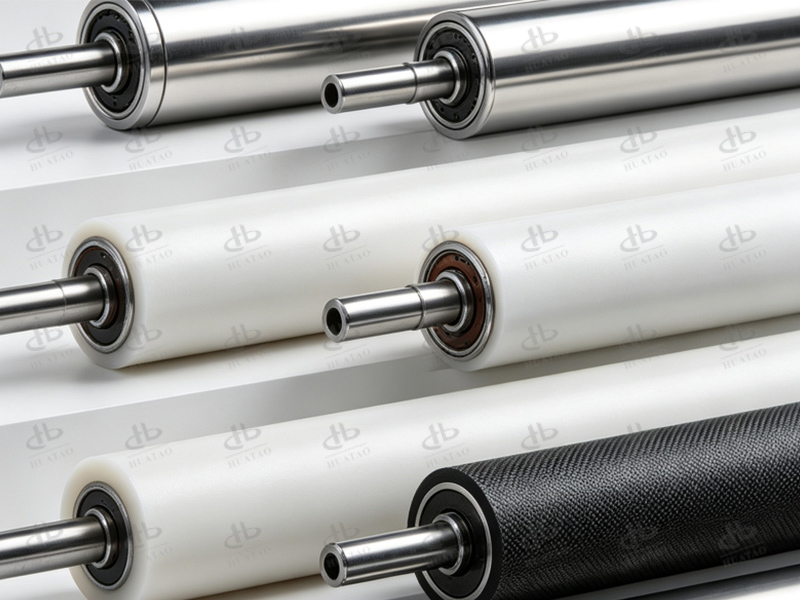
1 Overview of Prepreg Composite Materials Prepreg is a key semi-finished intermediate material in the high-end composite manufacturing industry, which is widely used in aerospace equipment, wind power generators, new energy vehicles and rail transit facilities. Although its appearance is similar to ordinary adhesive film rolls, it has ultra-light weight, ultra-high specific strength and long-term stable dimensional performance, and has become an irreplaceable core raw material for upgrading all kinds of high-performance industrial components. Prepreg is formed by fully infiltrating reinforcing fibers such as carbon fiber, glass fiber and aramid fiber with resin matrix and carrying out semi-curing B-stage treatment. During the molding process, manufacturers can directly heat and pressurize prepreg to form finished parts without on-site resin blending and dipping procedures, which greatly improves the consistency and stability of finished composite products. Its core competitive advantages are summarized as follows: The fiber orientation and resin content can be precisely controlled in the production stage; The internal void ratio of the finished material is low, with excellent comprehensive mechanical properties; Short forming cycle, which meets the demand of mass production of high-end parts; Customizable width, thickness and fiber laying mode to adapt to different process requirements of various industries. 2 Three Major Classification Standards of Prepreg Materials The overall performance of prepreg is determined by resin matrix, reinforcing fiber type and fiber laying structure. Different collocation schemes correspond to differentiated industrial application scenarios. 2.1 Classification Based on Resin Matrix: Thermoset Prepreg & Thermoplastic Prepreg 2.1.1 Thermoset Prepreg (Mainstream Market Product) After complete curing, the molecular structure cannot be melted and reconstructed, featuring stable dimensional performance and excellent mechanical strength, which is the mainstream material choice for aerospace and wind power industries. Epoxy prepreg: Balanced comprehensive performance, outstanding heat and moisture resistance and strong bonding force, suitable for aircraft fuselage, wind turbine blades and high-end sports equipment; Phenolic prepreg: Excellent heat resistance and flame retardancy, low smoke emission after combustion, applied to aircraft interior parts and marine fire-proof structural components; BMI prepreg: Stable continuous service temperature up to 250℃, matched with aero-engine shells and wing leading edge structures; Cyanate ester prepreg: Low dielectric constant and high wave transmittance, customized production for radome and satellite signal receiving components. 2.1.2 Thermoplastic Prepreg (Fast-Growing New Material Category) It supports secondary hot melting, hot repair and impact resistance, with short molding cycle, which is suitable for mass production of automobile parts and unmanned aerial vehicle components. PEEK & PEKK prepreg: High temperature and wear resistance, used for aero-engine accessories and high-end medical implant materials; PPS prepreg: Flame retardant and corrosion resistant, applied to new energy vehicle battery shells and wind power auxiliary structures; PA prepreg: Low comprehensive cost and strong toughness, widely used in automobile structural parts and drone blades. 2.2 Classification Based on Reinforcing Fiber Carbon fiber prepreg: The highest specific strength and modulus, the optimal lightweight material solution for aerospace and high-performance racing vehicles; Glass fiber prepreg: Excellent cost performance, insulation and corrosion resistance, suitable for civil building materials and ordinary automobile parts; Aramid fiber prepreg: Super anti-impact and anti-cut performance, specially used for bulletproof equipment and aviation fire partition plates. 2.3 Classification Based on Fiber Laying Structure Unidirectional prepreg: Fibers arranged in a single direction, with more than 90% strength utilization rate, suitable for main load-bearing beams and support shafts; Woven fabric prepreg: Warp and weft interweaving structure, balanced isotropic performance and flexible forming, applicable to equipment shells and complex curved parts. 3 Six Standardized Production Procedures of High-Quality Prepreg The production of high-standard prepreg requires full-process precision control. Each roll of finished material needs to go through six complete standardized processes to eliminate quality fluctuation risks: Raw material inspection: Conduct batch performance test on fiber and resin raw materials; all indexes need to be rechecked after replacing raw material suppliers; Resin modulation: Strictly control the temperature, humidity and reaction time of the modulation environment to stabilize resin viscosity and gel time, and avoid premature polymerization or damp deterioration; Resin film coating: Equipped with flat release film, matched with closed-loop tension system, heating rolland line speed control to produce uniform resin film without bubbles and cracks; Fiber dipping and lamination: Realize uniform fiber spreading and stable tension control to complete full resin infiltration without dry fiber spots, which is the core link of the whole production line; Finished product inspection: Manually check the surface for wrinkles and foreign impurities; the resin content tolerance is controlled within ±2%, the volatile content is kept below 1%~1.5%, and the viscosity and drapability meet industrial standards; Finished product storage and transportation: Sealed storage environment below 5℃ with horizontal stacking; restore to room temperature before unpacking to avoid condensation and material waste. Aerospace-grade low-porosity prepreg puts forward ultra-high requirements for processing precision. Advanced domestic prepreg production lines are equipped with electromagnetic induction heating rolls, whose surface temperature control accuracy reaches ±1℃ and machining precision reaches micron level, breaking the long-term dependence on imported high-end processing equipment. 4 Main Application Fields of Prepreg Composite Materials Aerospace industry: Epoxy, BMI and cyanate ester carbon fiber prepreg are adopted for aircraft fuselage, wings, radomes and engine high-temperature components; Wind power industry: Carbon fiber epoxy prepreg is used for main beams of large wind blades, and glass fiber prepreg for auxiliary structural parts; New energy vehicle industry: Glass fiber PA prepreg for automobile body structural parts, carbon fiber PPS prepreg for battery shells to realize lightweight and safe design; Rail transit industry: Lightweight and flame-retardant prepreg for vehicle body structures and interior accessories to reduce noise; Sports and protective equipment: Prepreg materials for golf clubs, tennis rackets and skis; aramid fiber prepreg for bulletproof vests and safety helmets. 5 Core Processing Equipment for Prepreg Production Lines The formula determines 70% of the final quality of prepreg, while production equipment determines the remaining 30%. Modern high-end prepreg manufacturing develops towards continuous, intelligent and ultra-precise direction. The whole production flow including fiber unwinding, spreading, film coating, hot pressing lamination, traction and winding realizes full closed-loop automatic control. The hot pressing section, as the core working area of the production line, is equipped with precision electromagnetic induction heating rolls, which support real-time fine adjustment of temperature, roll gap and tension, and ensure that the resin content, thickness and surface flatness of prepreg reach aerospace manufacturing standards. This complete set of production equipment supports three mainstream processes including hot melt, single-step and two-step molding, and is compatible with carbon fiber, glass fiber, aramid fiber as well as epoxy, PEEK, PPS, PA and other resin systems. It can stably mass-produce both thermoset and thermoplastic prepreg, and promote domestic composite prepreg to upgrade from ordinary functional materials to high-performance stable industrial raw materials. 6 Industry Development Prospect As a segmented composite material, prepreg is the indispensable base material for all high-end composite manufacturing. With customized formula design, stable physical properties and efficient molding technology, it continuously optimizes the strength and dead weight of industrial parts and extends service life. From large civil aircraft, offshore wind turbines to new energy passenger cars, prepreg is promoting the lightweight, high-performance and green transformation of advanced manufacturing industry. In the future, with the popularization of thermoplastic prepreg, simplification of molding process and reduction of equipment procurement cost, the application scope of prepreg will expand from high-end exclusive fields to a large number of civil manufacturing industries, and gradually become a general high-performance composite intermediate material widely used in all walks of life. High-precision silicone rolls and metal induction heating rolls can effectively improve the surface quality and overall yield of prepreg finished products. Contact Information WhatsApp: +86 17743789775 Email: sale05@huataogroup.com Official Website: https://www.huataorolls.com/induction-heating-roll.html
Read More