


-
 admin
admin - 14th October 2026
In-Depth Analysis of the Forming Roller in Crescent Former Tissue Machines: Purpose, Dewatering Mechanism, and Manufacturing Standards
1. The Core Position of the Forming Roller in Crescent Former Machines
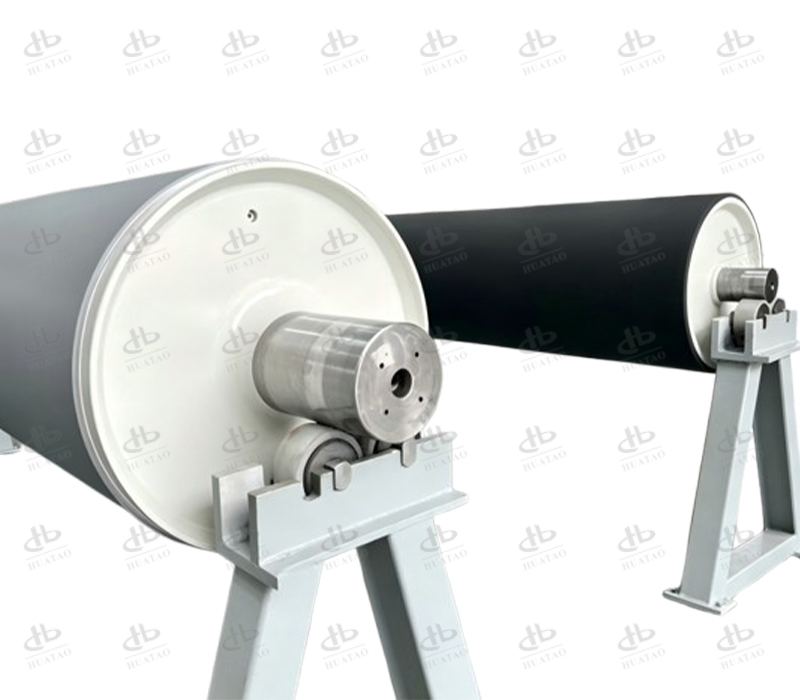
In the forming system of a Crescent Former, the forming roller is the core component of the entire sheet forming process. It simultaneously serves three roles: dewatering and forming platform, sheet transfer center, and structural support. It directly affects sheet formation uniformity, dryness, and the stability of subsequent pressing and drying processes.
For Valmet Crescent Former tissue machines, the forming roller is not merely a key roll in the mechanical structure, but the fundamental unit that determines dewatering efficiency and sheet quality in the forming zone.
2. Core Function: Forming and Dewatering
The forming roller is located between the headbox and the press section, providing a stable, controllable curved surface for pulp dewatering and sheet forming. Its dewatering action is achieved through the coordinated operation of the following two mechanisms.
2.1 Tension Dewatering
Tension dewatering is the primary dewatering method in Crescent Former machines. The forming fabric is tensioned against the forming roller, and the fabric tension applies pressure to the pulp layer sandwiched between the felt and the forming fabric, squeezing water out of the sheet. This mechanism determines the uniformity and efficiency of dewatering in the forming zone.
2.2 Centrifugal Dewatering
As the fabric and felt carrying the wet sheet pass at high speed over the curved surface of the forming roller, the centrifugal force generated further throws water out of the sheet. The thrown-off white water is collected by a save-all pan. As machine speed increases, the role of centrifugal dewatering becomes more pronounced.
During this process, the wet sheet exits the headbox at a consistency of approximately 0.2%. After passing through the forming roller zone, dryness can rapidly increase to approximately 10%–12%. This dryness increase lays the foundation for subsequent pressing and drying processes.
3. Structural Role: Support and Transfer
The forming roller is also the physical core of the entire forming zone. Its structural role is mainly reflected in the following three aspects.
3.1 Providing the Forming Arc
The forming roller provides a standardized, adjustable curved dewatering zone for the pulp ejected from the headbox — the “crescent” portion of the Crescent Former structure. The geometric precision of this arc directly affects sheet formation uniformity.
3.2 Carrying and Transferring the Sheet
The formed wet sheet leaves the forming roller attached to the felt (inner fabric) and is conveyed by the felt to the subsequent press section. This transfer process is smooth because the felt surface is finer and more water-retentive than the forming fabric, and the sheet tends to adhere to the felt.
3.3 Serving as the Press Bottom Roll
In many designs, the forming roller also presses against a press roll to form a press nip, performing further mechanical dewatering of the sheet. This gives the forming roller dual functions of forming and pressing.
4. Technical Features of Valmet IntelliFormer Crescent Forming Section
Valmet’s IntelliFormer crescent forming section inherits the above principles and has clear technical emphases. Official materials emphasize that its simple design brings high reliability and low maintenance requirements, and can achieve uniform Z-direction formation, laying the foundation for high-quality tissue production.
For tissue machines, the operational stability and rubber covering quality of the forming roller are among the key factors determining sheet quality and equipment life.
5. Forming Roller Technical Data and Manufacturing Standards
The following are technical data for a forming roller suitable for Valmet Crescent Former tissue machines operating at 1800 m/min.
Technical Data Sheet
Roller body: Q355B
Journal: 42Cromo
Rubber thickness: 10 mm
Rubber type: Synthetic Rubber (named brand)
Runout: ≤0.05
Cylindricity: ≤0.05
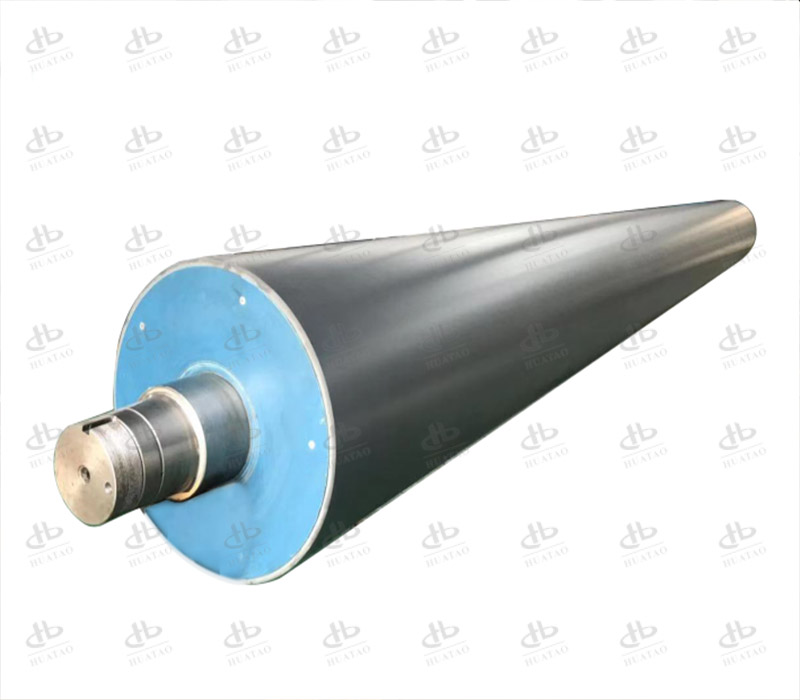
Forming roller size: Φ1500×4050
This specification of forming roller is applied to Valmet Crescent Former tissue machines at a machine speed of 1800 m/min, with excellent feedback from the field.
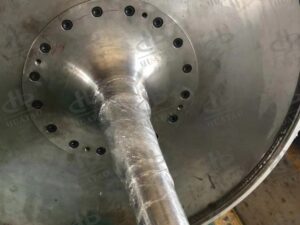
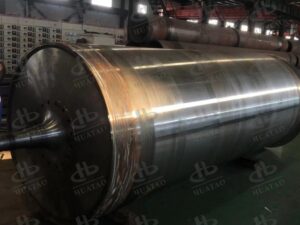
6. Materials and Production Standards
The materials and production standards of the forming roller are supported by corresponding certificates, and production strictly follows customer drawings and European standards. The manufacturing process covers roll body machining, journal treatment, rubber covering, dynamic balancing, and precision inspection, with production and shipping photos available as quality records.
For high-speed tissue machines, the runout and cylindricity control of the forming roller is particularly critical. The precision requirements of Runout ≤0.05 and Cylindricity ≤0.05 can meet the requirements for forming stability and sheet quality under high-speed operation.
7. Application Scenarios and Supply Information
This forming roller is suitable for Valmet Crescent Former Machines tissue machines at a machine speed of 1800 m/min, and can be used for dewatering and forming in the forming zone of Crescent Former machines as well as press bottom roll applications.
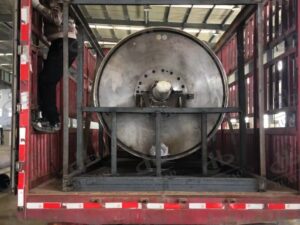
For forming roller inquiries, please contact:
Jenny Liu
Mobile phone: 86 17743789775
Web: https://www.huataomulti-indusrolls.com/paper-industry/
Email: sale05@huataogroup.com
#FormingRoller #CrescentFormer #ValmetTissueMachine #TissuePaperForming #TensionDewatering #CentrifugalDewatering #PressBottomRoll #TissueMachineFormingRoller #Q355BRollBody #42CromoJournal #SyntheticRubberCovering #PaperMachineRollManufacturing #PaperMachineryParts

 Related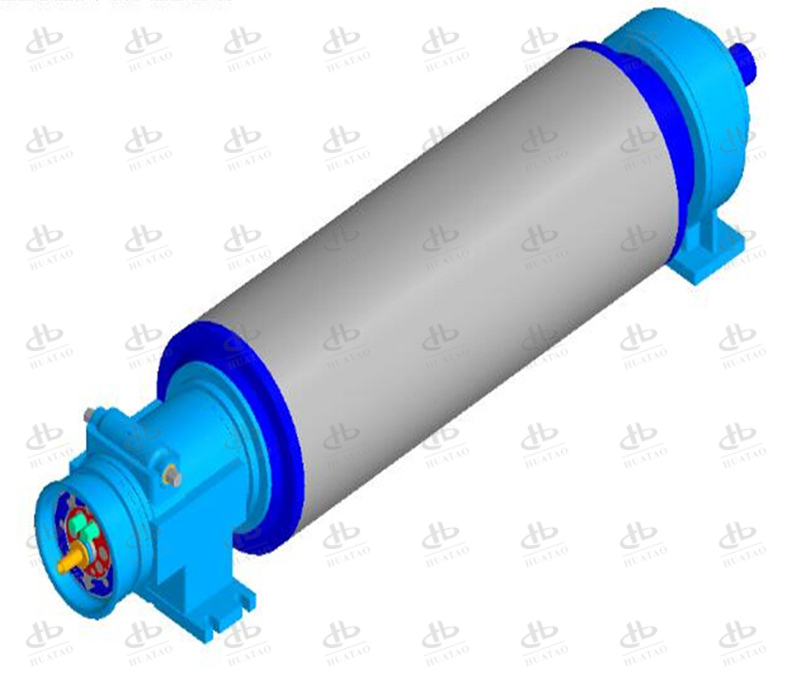




Excellent Service Each and Every Time