EN
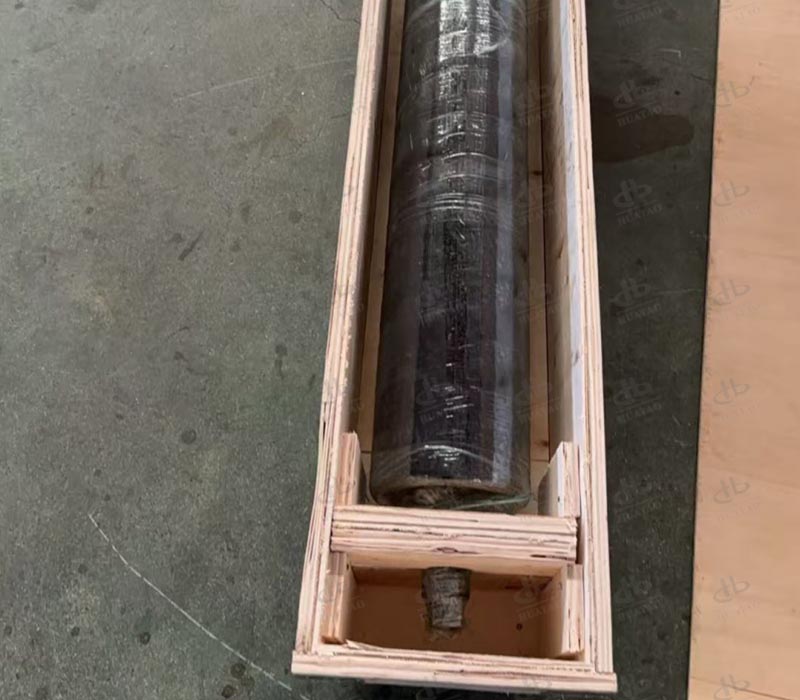
MDO nip roll (1)(2)
MDO nip roll (1)(1)
MDO nip roll (5)(1)
MDO nip roll (9)(1)
MDO nip roll (6)(1)
MDO nip roll (1)(3)
MDO nip roll (2)(1)
MDO nip roll (4)(1)
MDO nip roll (7)(1)
MDO nip roll (8)(1)
MDO nip roll (10)(1)
MDO nip roll (3)(1)
MDO nip roll (1)(2)
MDO nip roll (1)(1)
MDO nip roll (5)(1)
MDO nip roll (9)(1)
MDO nip roll (6)(1)
MDO nip roll (1)(3)
MDO nip roll (2)(1)
MDO nip roll (4)(1)
MDO nip roll (7)(1)
MDO nip roll (8)(1)
MDO nip roll (10)(1)
MDO nip roll (3)(1)

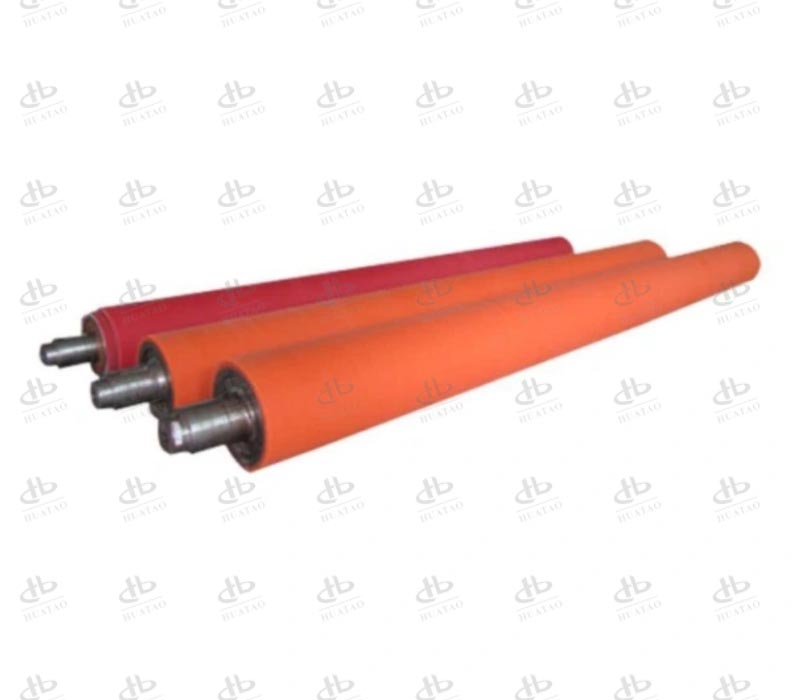
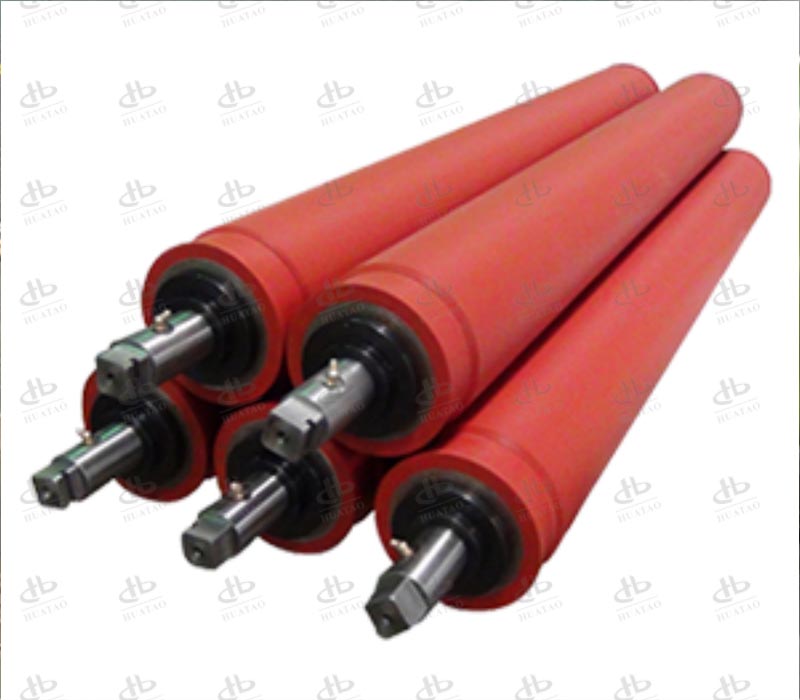
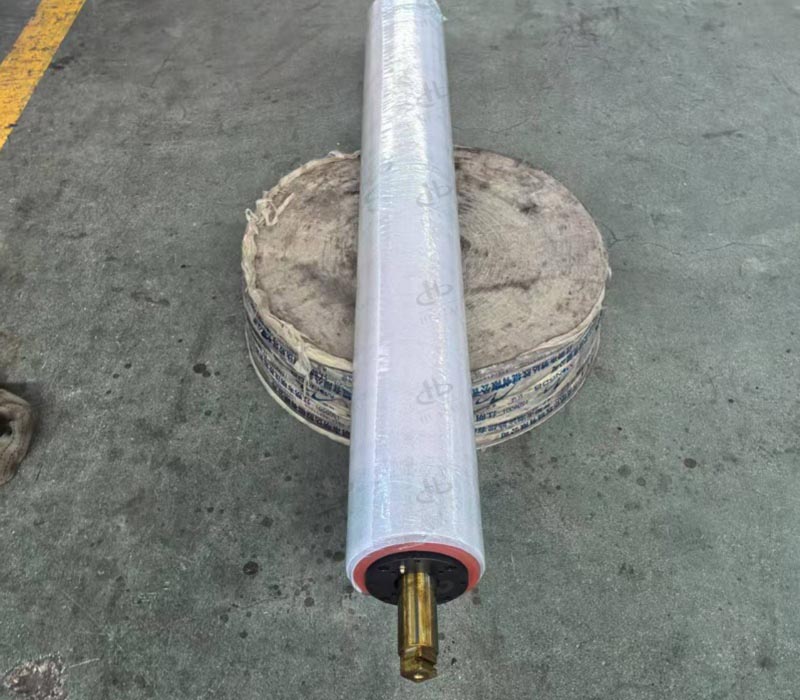
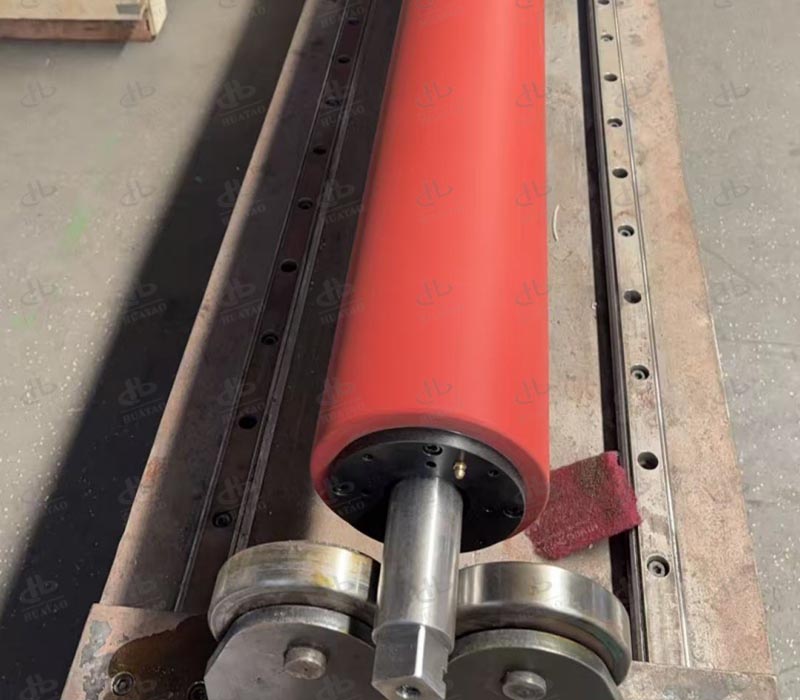
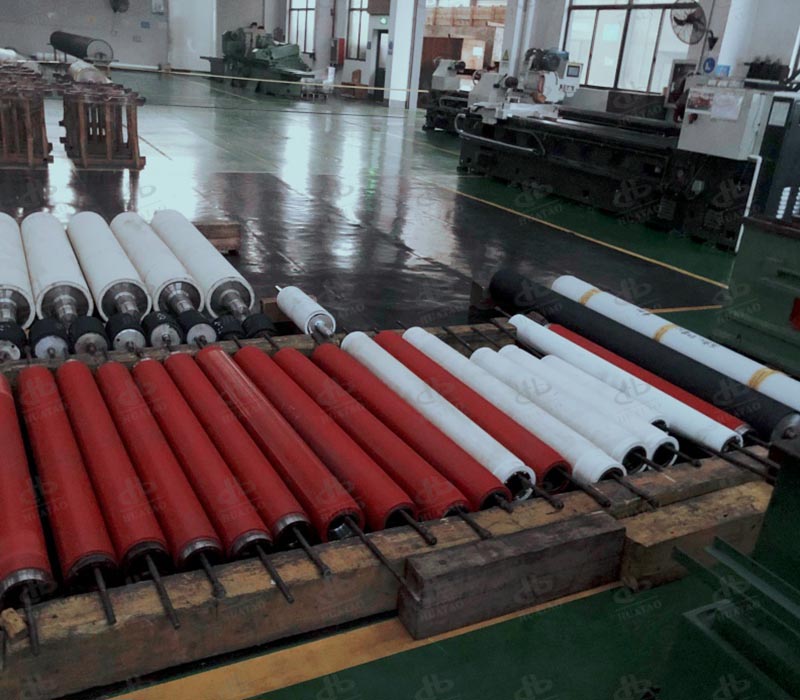
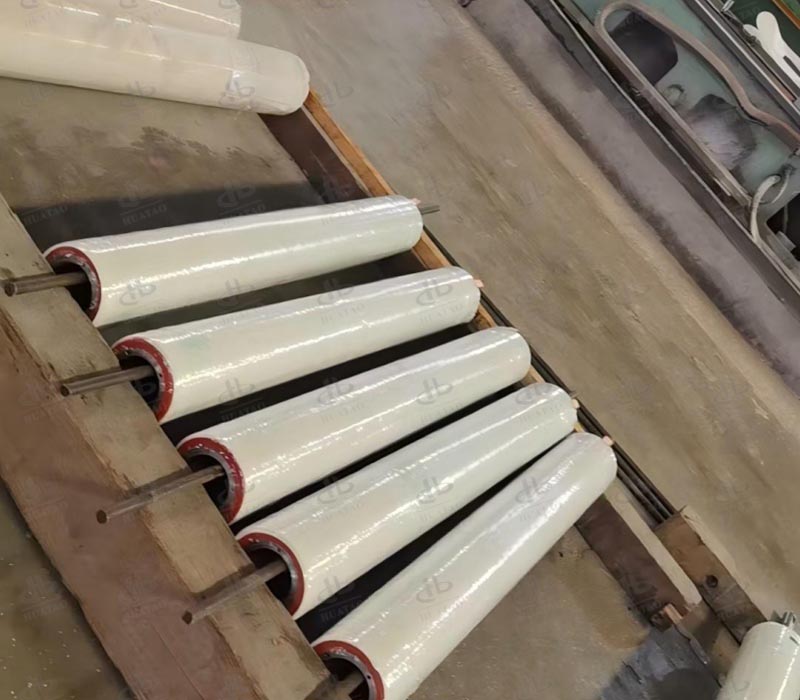
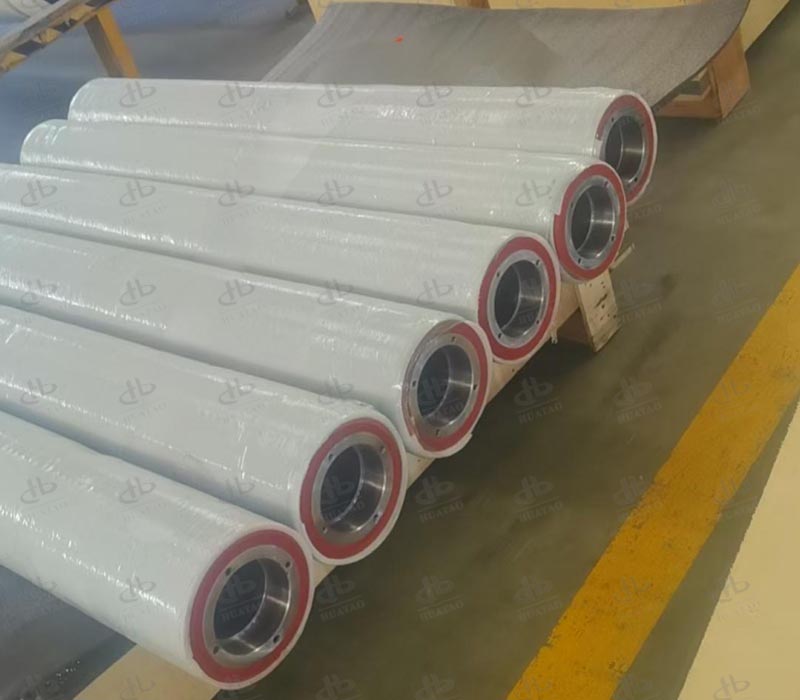
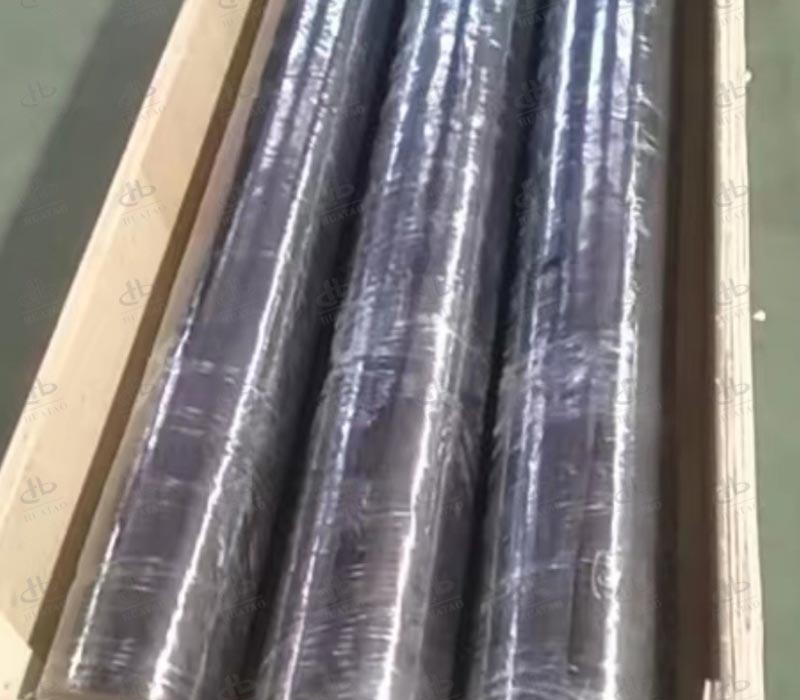
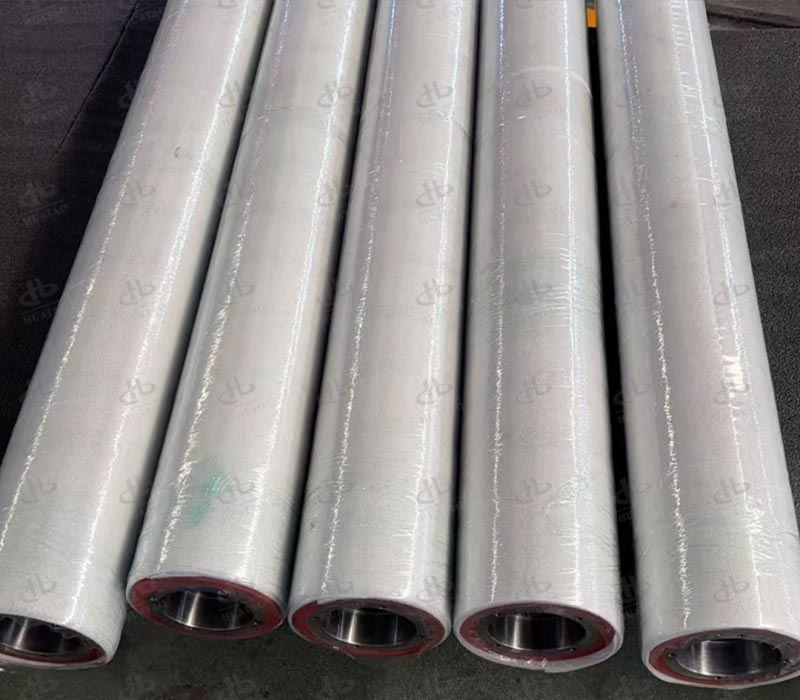
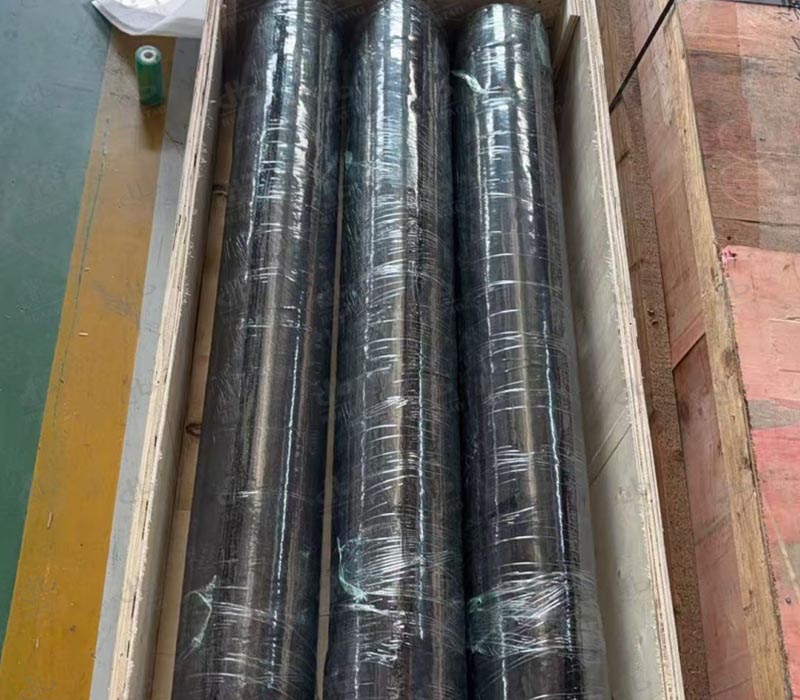
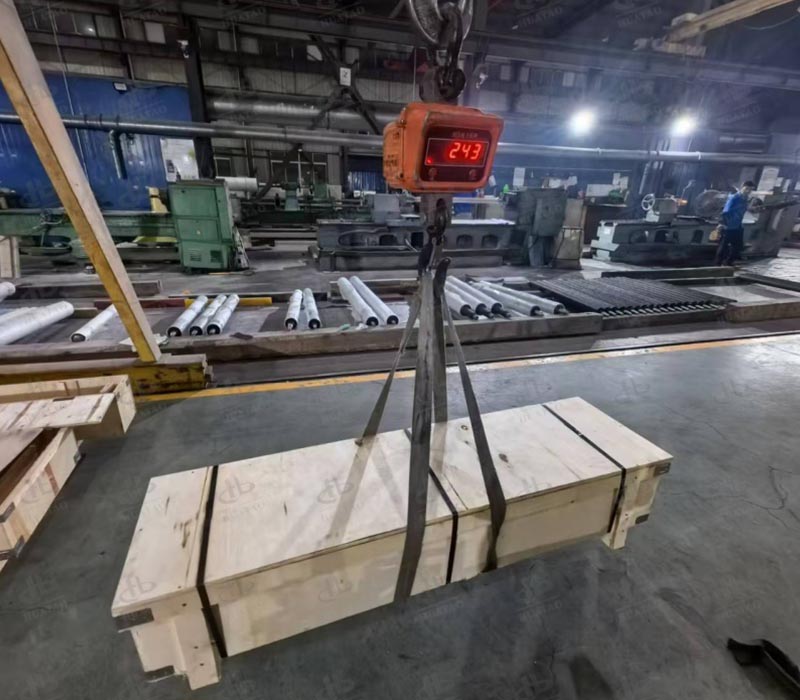
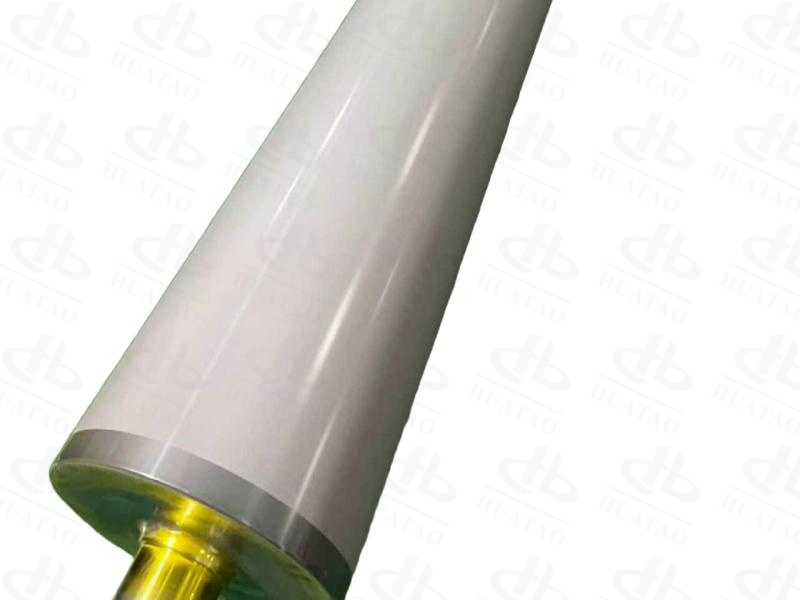
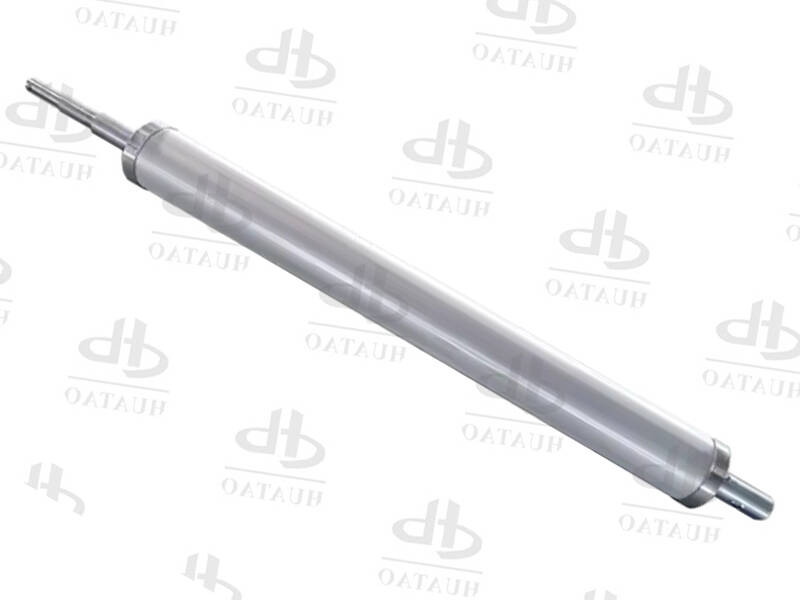
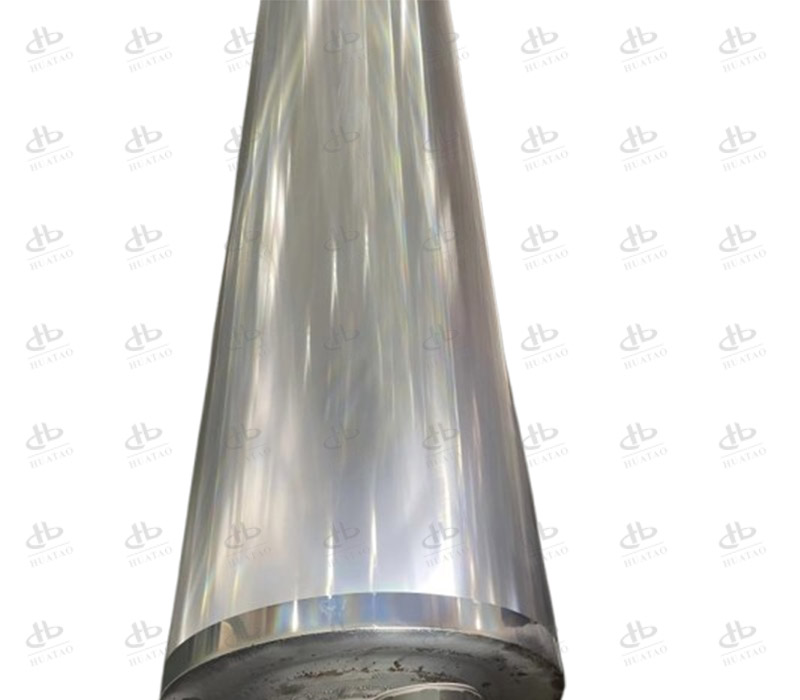
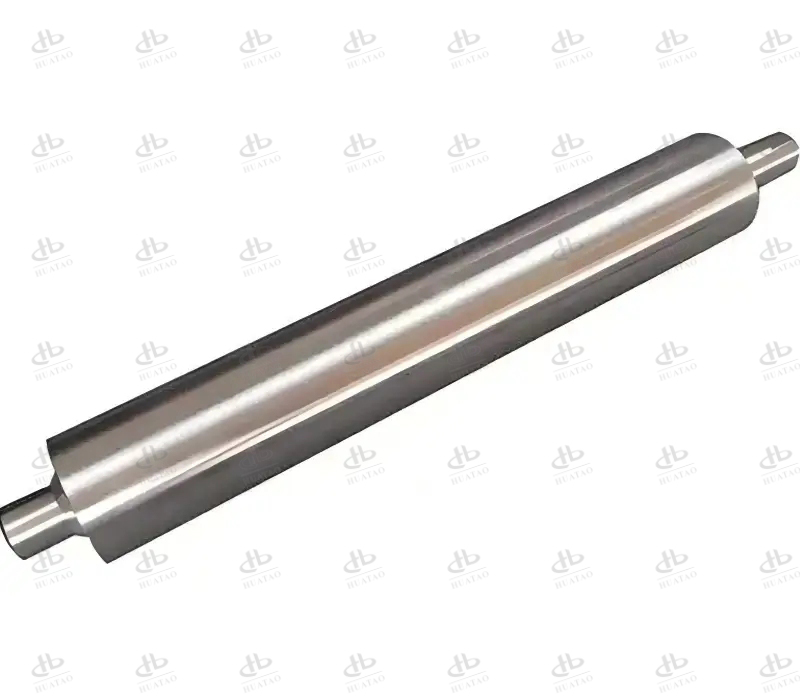
MDO Nip Roll

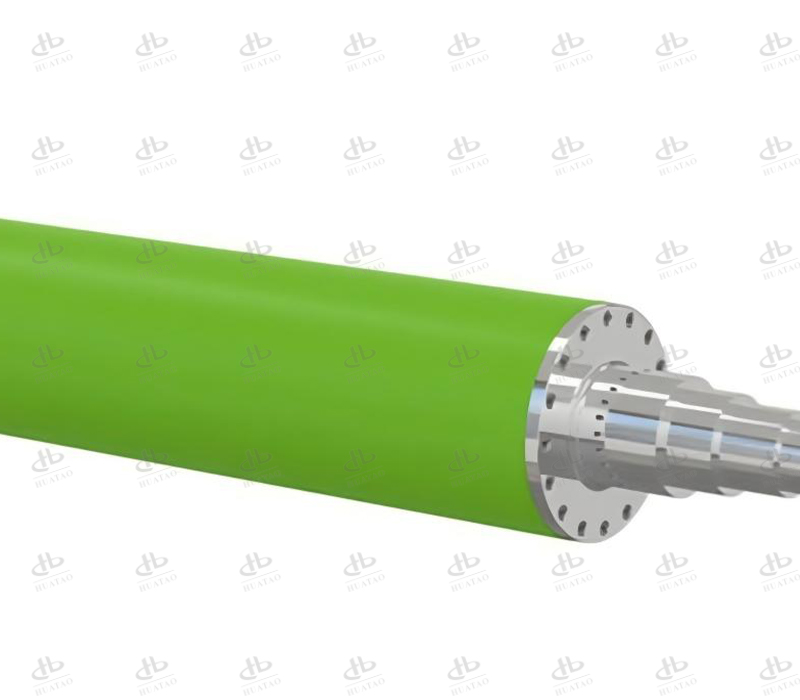
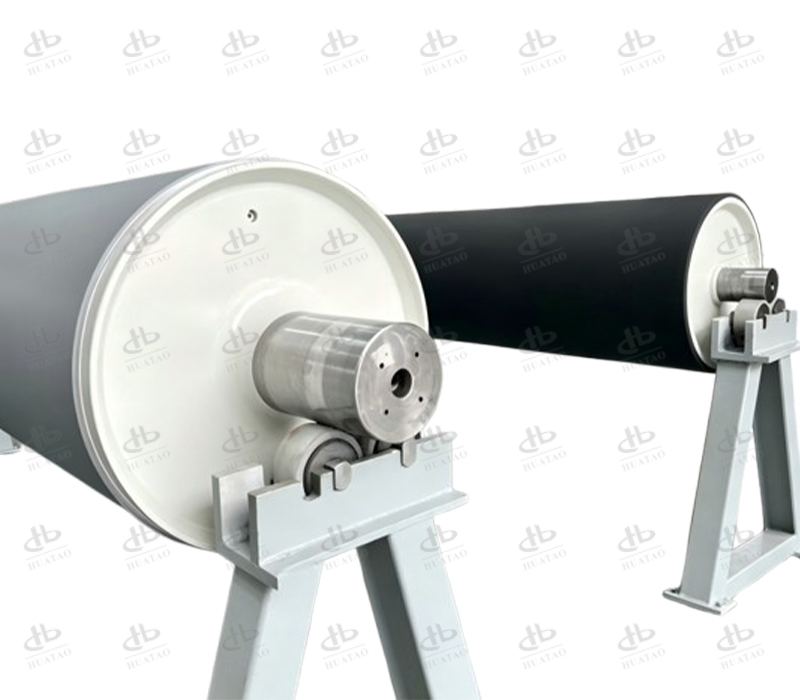
Engineered for high-speed Machine Direction Orientation (MDO) stretching units, Huatao Group High-Precision MDO Nip Roll is designed to ensure synchronous web traction and flawless film flatness. Positioned as a critical clamping component against preheating and stretching rollers, this nip roll eliminates air entrainment, web wrinkling, and slippage under high-tension conditions. Wrapped in advanced, temperature-resistant elastomers (such as tailored EPDM, silicone, or specialized rubber compounds), it maintains stable hardness and resilient pressure distribution even in prolonged heating environments up to 180°C. Featuring a robust structural core with rigorous dynamic balancing (G2.5) and precision geometric tolerances (≤0.01mm), our MDO Nip Roll dramatically reduces web-breaking rates and eliminates surface checking, ensuring optimal optical clarity and consistent gauge uniformity for your oriented polyfilm products.
Parameters

Detailed Product Description

The MDO process exerts extreme thermal and mechanical stresses on polyfilm web handling. Our MDO Nip Roll is engineered to deliver precise, uniform linear pressure across the entire face length, securing the film firmly without inducing surface scratches, impressions, or thermal tracking.


Key Features

Premium Thermal-Resistant Elastomers: Premium-grade rubber coatings are formulated to withstand continuous temperatures of 150°C to 180°C without premature aging, cracking, or losing durometer hardness, preventing polymer residue buildup.

Flawless Pressure Profile & Resiliency: Tailored crown profiles (straight, parabolic, or concave) are calculated using advanced deflection simulation to counteract core bending, ensuring an absolute uniform footprint across the wide web width.

Strict Geometric Control: Coaxiality and cylindricity are restricted to within ≤0.01mm, eliminating any high-speed micro-vibrations that cause gauge variations or stretch marks on the film.

Heavy-Duty Core Design: Fabricated from seamless carbon steel or forged alloy steel tubes, treated with internal stress relieving, and dynamically balanced to ISO G2.5 standards for smooth rotation at speeds exceeding 600 m/min.


Technical Specifications Table

Technical Parameters Specification Range / Value
Coaxiality / Cylindricity ≤ 0.01 mm
Straightness ≤ 0.01 mm
Dynamic Balancing Quality Grade ISO 1940 G2.5 standard
Coating Materials Available Specialized EPDM, High-Temp Silicone, Synthetic Rubber, Hypalon
Hardness Range Availability 60 – 90 Shore A (Customized per application)
Maximum Operational Temperature Up to 180 °C
Base Core Material Options Seamless Carbon Steel, Alloy Steel, Stainless Steel


Target Applications & Industry Scenarios

This high-performance MDO Nip Roll is fully compatible with global high-end film extrusion and orientation lines, specifically optimized for:

BOPP / BOPET Film Lines: Safeguarding the polymer web during high-speed longitudinal stretching.

Lithium Battery Separator Lines: Maintaining micron-level thickness consistency in critical wet/dry orientation processes.

CPP / CPE & Barrier Cast Lines: Functioning as secondary nip stations for multi-layer high-barrier functional films.

MDO-PE Sustainable Film Lines: Facilitating uniform stretching for modern, recyclable full-PE mono-material flexible packaging.


Frequently Asked Questions

Q1: How do you choose the right rubber coating hardness for an MDO Nip Roll?

A1: It depends heavily on your film thickness, line tension, and operating temperature. Generally, preheating stages use a softer durometer (65-75 Shore A) to cushion the delicate melt, while high-ratio stretching zones require harder compounds (80-90 Shore A) to forcefully prevent micro-slippage.

Q2: Our current nip rolls suffer from rubber debonding at 160°C. How does your product prevent this?

A2: We use a proprietary multi-layer chemical bonding system between the steel core and the rubber cover. Together with advanced vulcanization and vulcanizing agents, our bonding interface remains completely stable and peel-proof up to continuous thermal limits of 180°C.


Corporate Strength & Manufacturing Capability

Huatao Group as a premier global leader in web-handling and processing roller technology, the manufacturing excellence and field-tested reliability speak for themselves. Today, we proudly serve as the trusted partner and supplier to more than 40 large-scale BOPP and BOPET film production enterprises worldwide. This proven track record underscores our unique ability to meet the most stringent industrial demands for extreme line speeds, massive cross-widths, and 24/7 continuous high-load stability.

Our state-of-the-art manufacturing facility houses heavy-duty CNC cylindrical grinding machines, high-speed dynamic balancing rigs, and advanced fully automated vertical electroplating lines, capable of processing custom rollers up to Ø3500mm in diameter and 12000mm in length. Backed by robust hydrostatic and laser geometric validation systems, we guarantee that every roll delivered delivers peak performance, allowing modern film production lines to operate with absolute confidence.


icon Related News icon

Related News

In-Depth Analysis of the Forming Roller in Crescent Former Tissue Machines: Purpose, Dewatering Mechanism, and Manufacturing Standards

In the forming system of a Crescent Former, the forming roller is the core component of the entire sheet forming process. It simultaneously serves three roles: dewatering and forming platform, sheet transfer center, and structural support.
Read More

High-Precision Corona Roll and Corona Nip Roll Shipped for Film Corona Treatment Line

Successful Shipment of Customized Corona Roll and Corona Nip Roll We recently completed the manufacturing and shipment of a customized Corona Roll and Corona Nip Roll for a high-speed film corona treatment application. The project includes a large-width Ø708 × 9,200 mm Corona Roll and a 570 × 9,200 mm Corona Nip Roll, both engineered according to demanding requirements for roller structure, rubber performance, dimensional accuracy and dynamic balancing. In a modern film production line, the corona treatment section is an important process for modifying the surface properties of polymer films before printing, coating, laminating, adhesive bonding or metallizing. The Corona Roll and Corona Nip Roll are critical rollers in the traction and corona treatment section, helping maintain stable film transport and controlled contact conditions during continuous high-speed operation. For wide film lines, roller precision is particularly important. Roller runout, cylindricity, rubber hardness, surface roughness, structural rigidity and dynamic balance can all influence the mechanical stability of the film web as it passes through the corona treatment area. 1. The Role of Corona Roll in Film Corona Treatment The Corona Roll is a precision roller used in film surface treatment and traction systems. It supports the film web while maintaining controlled film movement through the corona treatment zone. Polymer films such as BOPP, BOPET, CPP, PE and other plastic films generally have relatively low surface energy in their untreated state. Corona treatment modifies the film surface to improve its suitability for subsequent processes such as: Printing Coating Laminating Adhesive bonding Metallizing Ink adhesion The mechanical performance of the Corona Roll is therefore an important part of maintaining stable film handling during the treatment process. For high-speed film production, the roller must maintain its designed geometry and dynamic stability throughout continuous operation. 2. Corona Nip Roll: A Key Roller in the Traction Section The Corona Nip Roll, also known as a corona pressure roller or corona nip roller, works together with the Corona Roll to provide controlled film contact and web traction. The nip roller’s rubber surface provides the required mechanical contact with the film web. Its rubber hardness, thickness, surface roughness and geometric accuracy must therefore be carefully controlled according to the application. For this project, the Corona Nip Roll uses EPDM rubber with a specified hardness of 50 ± 2 Shore A and a rubber thickness of 12–15 mm. The roller is designed with: Q355B outer tube Forged flange Forged disc head EPDM rubber covering G2.5 dynamic balancing The combination of structural rigidity and controlled rubber properties provides a precision traction component for the corona treatment section. 3. Ø708 × 9,200 mm Corona Roll The main Corona Roll supplied for this project has an overall specification of: Ø708 × 9,200 mm The large-diameter, wide-face construction requires careful control of shell fabrication, journal assembly, machining accuracy, rubber covering and dynamic balancing. Corona Roll Technical Specifications Parameter Specification Product Corona Roll Dimensions Ø708 × 9,200 mm Construction Double-shell construction Cooling Connection Water inlet and outlet at the same end Inner Shell Material Q345B Outer Shell Material Q345B Journal Material 42CrMo Journal Assembly Interference assembly Rubber Material Silicone Rubber Rubber Thickness 4 mm Rubber Hardness 75–80 Shore A Surface Roughness Ra 1.6 μm Runout ≤ 0.10 mm Cylindricity ≤ 0.10 mm Dynamic Balance G2.5 Maximum Speed 630 m/min 4. Double-Shell Construction and Same-End Water Connections One of the key engineering characteristics of this Corona Roll is its double-shell construction. Both the inner and outer shells are manufactured from Q345B, while the journals are manufactured from 42CrMo. The roller incorporates a cooling system in which the water inlet and water outlet are positioned at the same end of the roller. This configuration is particularly useful when the machine layout requires the cooling connections to be concentrated on one side of the roller. For a large-diameter roller with a face length of 9,200 mm, structural stability and dimensional control are essential. The shell and journal assembly must provide sufficient mechanical integrity for continuous high-speed rotation. The journal is assembled with the outer shell using an interference assembly process, providing a robust connection between the roller body and journal. 5. High-Speed Dynamic Balancing: G2.5 The Corona Roll is designed for a maximum line speed of: 630 m/min At high operating speeds, even relatively small rotor imbalance can contribute to vibration and dynamic loading. For this reason, the finished roller is dynamically balanced to: G2.5 Dynamic balancing is particularly important for wide and large-diameter film rollers because stable rotational behavior helps support: Smooth film transportation Reduced mechanical vibration Stable bearing operation Reduced vibration transfer to the film line Reliable continuous operation Dynamic balance is therefore an essential part of the manufacturing process rather than simply an optional finishing step. 6. Silicone Rubber Surface for Corona Roll The Ø708 × 9,200 mm Corona Roll is equipped with a 4 mm silicone rubber layer. The specified rubber properties are: Hardness: 75–80 Shore A Surface Roughness: Ra 1.6 μm Silicone rubber is selected for its combination of elasticity, surface properties and suitability for demanding industrial roller applications. The rubber thickness and hardness must be controlled consistently across the entire 9.2-meter roller width. Surface roughness is also controlled to Ra 1.6 μm, providing a defined surface condition for the film handling application. 7. 570 × 9,200 mm Corona Nip Roll The second roller supplied for this project is the Corona Nip Roll, with dimensions of: 570 × 9,200 mm It adopts a single-shell structure using a Q355B outer tube. The roller is equipped with a forged flange and disc head, providing a robust mechanical structure for continuous industrial operation. The roller surface is covered with EPDM rubber. Corona Nip Roll Technical Specifications Parameter Specification Product Corona Nip Roll Dimensions 570 × 9,200 mm Construction Single-shell structure Outer Tube Q355B Flange Forged Disc Head Forged Surface Material EPDM Rubber Rubber Thickness 12–15 mm Rubber Hardness 50 ± 2 Shore A Surface Roughness Ra 1.6 μm Runout ≤ 0.10 mm Cylindricity ≤ 0.10 mm Dynamic Balance G2.5 8. EPDM Rubber Surface for Corona Nip Roll The Corona Nip Roll uses an EPDM rubber surface with a thickness of 12–15 mm. The rubber hardness is specified at: 50 ± 2 Shore A This controlled hardness provides a defined elastic surface for the nip application. For a 9,200 mm-wide Corona Nip Roll, rubber uniformity across the full roller face is important. Variations in rubber thickness or hardness can influence the mechanical characteristics of the nip and film traction system. The finished surface is controlled to: Ra 1.6 μm while the roller body is manufactured to: Runout ≤ 0.10 mm and: Cylindricity ≤ 0.10 mm 9. Why Corona Roll and Corona Nip Roll Quality Matters The Corona Roll and Corona Nip Roll are important components in the traction and corona treatment section of a film production line. Corona treatment itself is an electrical surface modification process, but its stability also depends on the mechanical condition of the rollers transporting the film through the treatment zone. A precision roller system helps maintain a controlled film path and stable web movement. Key factors include: 1. Roller Runout Excessive runout can introduce periodic mechanical variation during roller rotation. 2. Cylindricity Good cylindricity is important for maintaining consistent roller geometry across the full working width. 3. Rubber Hardness The specified rubber hardness determines the mechanical response of the roller surface during film contact. 4. Surface Roughness Controlled surface roughness helps maintain consistent surface characteristics and film handling behavior. 5. Dynamic Balance G2.5 dynamic balancing is important for high-speed rotating rollers and helps control vibration generated during operation. 6. Structural Design For a 9,200 mm-wide roller, shell construction, journal design and flange/disc-head construction must be engineered according to the operating requirements. 10. Precision Manufacturing and Quality Inspection Large-width film processing rollers require comprehensive inspection throughout the manufacturing process. For this Corona Roll and Corona Nip Roll project, key quality-control requirements include: Dimensional Accuracy The roller diameter, overall face length, journal dimensions and critical assembly dimensions are controlled according to the approved technical specifications. Runout Control Both rollers are manufactured to: Runout ≤ 0.10 mm Cylindricity Control The roller body is controlled to: Cylindricity ≤ 0.10 mm Rubber Surface Inspection The rubber-covered rollers are inspected for: Rubber thickness Rubber hardness Surface roughness Surface uniformity Surface appearance Dynamic Balancing Both rollers are dynamically balanced to: G2.5 This is particularly important for the Ø708 × 9,200 mm Corona Roll with a specified maximum speed of 630 m/min. 11. Successful Shipment of Customized Film Treatment Rollers After completion of structural fabrication, shell and journal assembly, precision machining, rubber covering, surface finishing, dimensional inspection and dynamic balancing, the customized Corona Roll and Corona Nip Roll were successfully completed and prepared for shipment. This project demonstrates our manufacturing capability for large-diameter, extra-wide precision rollers used in film processing and corona treatment equipment. The two rollers were designed according to different functional requirements: Corona Roll Ø708 × 9,200 mm Double-shell construction, Q345B inner and outer shells, 42CrMo journals, same-end water inlet and outlet, 4 mm silicone rubber, 75–80 Shore A hardness and G2.5 dynamic balancing. Corona Nip Roll 570 × 9,200 mm Single-shell Q355B construction, forged flange and disc head, 12–15 mm EPDM rubber, 50 ± 2 Shore A hardness and G2.5 dynamic balancing. The successful shipment represents our ability to integrate mechanical design, precision machining, rubber engineering and dynamic balancing into customized roller manufacturing for film production equipment. 12. Conclusion For modern BOPP, BOPET, CPP, PE and other plastic film production lines, corona treatment is an important process for improving film surface characteristics for downstream printing, coating, laminating, bonding and metallizing. The Corona Roll and Corona Nip Roll are critical rollers in the traction and corona treatment section, where stable film transport and precise roller performance are required. For wide and high-speed production lines, roller selection should consider the complete engineering system, including: Roller diameter + working width + shell structure + cooling design + journal construction + rubber material + rubber hardness + surface roughness + runout + cylindricity + dynamic balancing The successful shipment of the Ø708 × 9,200 mm Corona Roll and 570 × 9,200 mm Corona Nip Roll demonstrates our capability to manufacture customized precision rollers for demanding film processing applications. If you are looking for a customized Corona Roll, Corona Nip Roll, Corona Treatment Roller or Film Traction Roller, we can develop the roller according to your film width, line speed, equipment structure, cooling requirements and rubber specifications. Contact Us Huatao Group-Jenny Liu Email: sale05@huataogroup.com Website:https://www.huataomulti-indusrolls.com/film-industry/ WhatsApp / WeChat: +86 177 4378 9775 For customized Corona Rolls, Corona Nip Rolls, film traction rollers and other precision industrial rollers, please contact our engineering team for technical consultation and quotation. #CoronaRoll #CoronaNipRoll #CoronaRoller #CoronaTreatment #CoronaTreatmentRoller #FilmCoronaTreatment #FilmProcessing #FilmManufacturing #BOPP #BOPET #CPP #PlasticFilm #FilmExtrusion #FilmTractionRoller #RubberRoller #SiliconeRubberRoller #EPDMRoller #PrecisionRoller #IndustrialRoller #G2Point5 #DynamicBalancing #FilmProduction
Read More

Huatao Company Celebrates Mid-Autumn Festival with Generous Gifts for Every Employee

A Tradition of Reunion, A Culture of Family: Huatao Honors Its People This Festive Season 25th,September 2026 — As the golden autumn breeze carries the fragrance of osmanthus, Huatao Company proudly celebrates the Mid-Autumn Festival, one of the most cherished traditional festivals in Chinese culture. This year, the company has prepared generous holiday gifts for every employee, reaffirming its commitment to a corporate culture rooted in family values and genuine care for its people. The Meaning of the Mid-Autumn Festival The Mid-Autumn Festival, celebrated on the fifteenth day of the eighth lunar month, is a time-honored occasion that holds deep significance in Chinese culture. It is a festival of reunion, gratitude, and completeness. The full moon that graces the night sky symbolizes family togetherness and the fulfillment of life’s hopes and dreams. For centuries, families have gathered beneath the bright autumn moon to share mooncakes, exchange blessings, and strengthen the bonds that unite them. At its core, the Mid-Autumn Festival reminds us of the importance of coming together, appreciating one another, and honoring the relationships that enrich our lives. It is this spirit of unity and appreciation that Huatao Company embraces wholeheartedly. Huatao’s Family Culture: Every Employee Is a Family Member At Huatao, the concept of “family culture” is not simply a slogan; it is a guiding principle that shapes every decision the company makes. Huatao believes that a company is more than a workplace. It is a community built on mutual respect, shared goals, and genuine human connection. Every employee is regarded as an integral member of the Huatao family, and their well-being, happiness, and growth are always a top priority. This philosophy has been the foundation of Huatao’s continued success. By fostering an environment where employees feel valued and supported, the company has cultivated a loyal, motivated, and high-performing team that drives innovation and excellence across all areas of operation. Generous Gifts for Every Huatao Family Member To express its gratitude for the dedication and hard work of its employees, Huatao Company prepared a generous selection of holiday gifts for every member of the team. These gifts, thoughtfully chosen and carefully packaged, include traditional mooncakes and other festive items that embody the warmth and generosity of the season. The gift distribution event was met with joy and enthusiasm. Employees expressed their appreciation for the company’s thoughtfulness, noting that the gifts served as a meaningful reminder of how much they are valued. For many, the gesture reinforced their sense of belonging and pride in being part of the Huatao family. This initiative reflects Huatao’s ongoing commitment to employee welfare and its belief that a happy, cared-for team is the cornerstone of long-term success. The company regularly invests in employee benefits, professional development, and workplace culture, ensuring that every team member has the support they need to thrive both personally and professionally. Looking Ahead: Growing Together, Getting Better Together As the Mid-Autumn Festival brings families together across the nation, Huatao Company extends its warmest wishes to every employee and their loved ones. The company expresses its sincere gratitude to all Huatao family members for their continued dedication and contributions, and to their families for the support that makes their work possible. Looking to the future, Huatao remains committed to growing alongside its people. The company will continue to invest in its team, strengthen its family culture, and create opportunities for shared success. With every passing year, Huatao strives to become a better place to work, a stronger business, and a more united family. Happy Mid-Autumn Festival from all of us at Huatao Company. May your days be filled with prosperity, your homes with joy, and our Huatao family continue to flourish — better and better, year after year. Contact Us For more information about Huatao Company, our corporate culture, or career opportunities, please contact us: Company: Huatao Company Website: https://www.huataomulti-indusrolls.com/ Email: sale05@huataogroup.com Phone:86 17743789775 #HuataoCompany #MidAutumnFestival #EmployeeBenefits #CorporateFamilyCulture #MidAutumnGifts #CompanyNews #EmployeeAppreciation #ChineseTraditionalFestival #CorporateCulture #StaffWelfare #HuataoNews #FamilyValues #EmployeeEngagement #WorkplaceCulture #HolidayGifts #TeamAppreciation #MidAutumnCelebration #CorporateSocialResponsibility #EmployeeCare #Huatao
Read More

Why Oil Isostatic Presses Are Important in Composite Materials Manufacturing

Uniform Pressure, Precise Temperature Control and Continuous Processing for FCCL, Advanced Composites, New Energy Materials and Laminated Panels As advanced composite materials continue to develop across the electronics, aerospace, automotive, hydrogen energy, solid-state battery, and construction industries, manufacturers are facing increasingly demanding requirements for pressure uniformity, temperature stability, material consolidation, thickness accuracy, and production efficiency. In modern composite materials manufacturing, the performance of the finished product is closely related to the stability of the production process. Uneven pressure, inconsistent temperature, insufficient consolidation, and thickness variation can affect bonding quality, material density, dimensional stability, and downstream processing performance. For these reasons, oil isostatic presses and continuous oil-pressure pressing systems are becoming increasingly important for composite lamination and multilayer material processing applications. An appropriately designed oil-pressure pressing system can provide controlled pressure transmission across the effective pressing area while maintaining stable processing temperatures. When integrated into a continuous production line, this technology can support consistent processing of multilayer composites, functional films, electronic laminates, new energy materials, and composite panels. What Is an Oil Isostatic Pressing System? An oil isostatic pressing system is designed to transfer controlled hydraulic or oil pressure through a pressure chamber to generate a relatively uniform pressing force over the effective working area. In a continuous pressing configuration, the oil-pressure chamber is incorporated into the pressing structure. Pressure is transferred through the pressing system between the grooved pressing plate and the steel belt, creating controlled contact pressure across the material being processed. This configuration is particularly suitable for multilayer materials in which different components may have different thermal expansion characteristics, viscosity, compressibility, and deformation behavior. During composite lamination, insufficient or uneven pressure may result in incomplete bonding, non-uniform resin distribution, voids, thickness variation, or inconsistent density. Uniform pressure distribution therefore plays an important role in achieving stable product quality. Continuous Composite Material Processing from Unwinding to Finished Product The pressing process is only one part of a modern automated composite manufacturing line. A complete continuous production system may integrate multiple stages, including:   This continuous production configuration allows materials to move through the processing line without repeated loading and unloading. The pressing section consequently becomes a critical process stage connecting material preparation with final product formation. By integrating material handling, heating, pressing, cooling, inspection, thickness measurement, and downstream cutting or winding, manufacturers can establish a more consistent and efficient production workflow. Continuous Composite Lamination and Pressing Process The process begins with multiple roll unwinding stations, where different material layers are introduced into the production line. The layers are then laminated and inspected before entering the preheating section. During the hot pressing stage, controlled pressure and temperature are applied to promote material consolidation and bonding. The material subsequently passes through cooling or cold plasticization processes before entering online thickness measurement and downstream slitting and winding systems. This continuous configuration is particularly beneficial for large-volume manufacturing of standardized composite materials and multilayer functional products. How Oil Isostatic Pressure Supports Composite Lamination Composite materials frequently consist of multiple layers, including resin systems, reinforcement fibers, metal foils, polymer films, and functional layers. Each material can exhibit different thermal, mechanical, and rheological characteristics. During heating and pressing, these differences can influence material flow, consolidation, and dimensional stability. A uniform pressing force helps maintain consistent contact between the different material layers. The main process benefits can include: Improved layer-to-layer bonding More uniform resin distribution Better material consolidation Reduced thickness variation More consistent material density Improved surface flatness Greater production repeatability For multilayer composite structures, controlling the pressure distribution over the effective working width is therefore an important consideration when designing a continuous pressing system. The Importance of Pressure and Temperature Control Pressure and temperature are two fundamental process parameters in composite lamination. During hot pressing, the resin system may need to reach a specific temperature range to soften, flow, impregnate reinforcement materials, or bond adjacent layers. At the same time, the applied pressure must be sufficient to consolidate the material structure. If temperature is too low, resin flow and bonding may be insufficient. If temperature is too high, excessive resin flow, material degradation, or dimensional instability may occur. Similarly, insufficient pressure may lead to poor consolidation, while excessive or uneven pressure can affect thickness and material structure. A stable pressing environment helps manufacturers control: Lamination quality Resin flow and distribution Material consolidation Finished-product thickness Material density Surface quality Dimensional stability Product consistency For high-performance composite materials, maintaining stable pressure and temperature throughout continuous production is particularly important. Density and Thickness Control in Composite Manufacturing Density and thickness are important quality parameters for composite boards, electronic laminates, functional films, and advanced material structures. During continuous pressing, the pressing gap and associated process parameters can be adjusted according to the required product specifications. Controlled consolidation allows manufacturers to produce materials with different thickness and density requirements while maintaining a stable production process. Thickness accuracy is particularly important for thin-sheet products. Even relatively small variations can influence material consumption, dimensional stability, electrical properties, mechanical performance, and downstream processing. Accurate thickness management can therefore contribute not only to product quality but also to improved material utilization and manufacturing efficiency. Advantages of Continuous Oil-Pressure Pressing One of the major advantages of a continuous oil-pressure pressing system is its ability to process material continuously. Traditional batch pressing generally requires materials to be loaded, pressed, held under pressure, and unloaded as separate production cycles. Continuous pressing eliminates much of this repeated handling by allowing material to enter and leave the pressing system continuously. The potential advantages include: Higher production throughput Reduced manual handling Improved equipment utilization More stable processing conditions Consistent pressure and temperature control Easier integration with online inspection Easier integration with thickness measurement Simplified downstream slitting and winding For high-volume composite materials manufacturing, continuous processing can provide significant advantages in productivity and process consistency. Energy Efficiency and Thermal Stability Energy consumption is an important consideration in modern industrial production. Because a continuous pressing system operates under relatively stable thermal conditions, the equipment does not need to repeatedly undergo complete heating and cooling cycles associated with intermittent batch production. Maintaining stable operating temperatures can help reduce unnecessary thermal losses and improve overall energy utilization, depending on the equipment design, insulation system, production speed, and process requirements. The combination of continuous material transport, controlled heating, and stable pressure makes continuous oil-pressure pressing technology suitable for high-volume material processing. Applications of Oil Isostatic Pressing in Advanced Materials Oil-pressure continuous pressing systems can be configured for a wide range of multilayer materials and composite products. Copper Clad Laminates and Electronic Materials Copper clad laminate (CCL) manufacturing requires controlled temperature, pressure, lamination quality, and thickness consistency. Continuous pressing technology can be considered for multilayer structures involving copper foil and high-performance functional films. Potential materials include: TPI films MPI films LCP films PTFE films PPS films Copper foil Functional polymer films Precise process control can help manufacturers improve lamination consistency and thickness uniformity for advanced electronic materials. Advanced Composite Materials Oil-pressure pressing systems can also be applied to multilayer structures combining resin, fiber, polymer, and metal materials. Potential applications include: Fiber-reinforced composites Resin-fiber composites Metal-fiber composites Metal laminates Thermoplastic composites Thermoset composites Polymer composite materials Rubber-based composite structures These materials are used in aerospace, automotive, transportation, industrial equipment, and other high-performance manufacturing applications. Hydrogen Fuel Cell and GDL Materials The development of hydrogen fuel cell technology is increasing demand for precise processing of functional multilayer materials. Potential applications include: Fuel cell materials Carbon paper Gas Diffusion Layer (GDL) Diffusion-layer materials Functional membrane structures These materials may require controlled pressure and temperature during lamination, consolidation, and thickness management. Solid-State Battery Materials Solid-state battery manufacturing introduces additional requirements for multilayer material processing and thickness control. Potential applications include: Solid-state battery materials Cathode materials Anode materials Solid-state electrolytes Multilayer battery structures Functional separator and interface materials Stable pressure and temperature conditions can be important for maintaining consistent material structure during continuous processing. Construction and Decorative Composite Panels Continuous pressing technology can also be used in the production of composite construction and decorative panels. Potential applications include: Wood-based panels Particleboard MDF PVC-faced panels Melamine-faced panels Artificial marble Artificial crystal stone Honeycomb panels Multilayer decorative panels Uniform pressure distribution can help improve bonding between surface layers and substrates while supporting consistent thickness and surface quality. Automation and Process Control A continuous oil-pressure pressing system requires coordinated control of multiple production parameters. Depending on the production configuration, the system may continuously monitor and regulate: Pressing pressure Processing temperature Line speed Pressing gap Material thickness Cooling conditions Production parameters Advanced automation reduces dependence on manual intervention and helps maintain stable operating conditions during extended production runs. For manufacturers operating high-volume production lines, automated process control can improve repeatability, equipment utilization, production efficiency, and quality management. Oil Isostatic Pressing as Part of an Integrated Manufacturing System The importance of an oil isostatic pressing system extends beyond the pressing section itself. As advanced composite materials become thinner, lighter, stronger, and more multifunctional, manufacturers require production systems capable of combining multiple process-control functions. An effective continuous composite manufacturing system integrates: Uniform Pressure Distribution + Precise Temperature Control + Thickness Management + Continuous Processing + Automated Monitoring   From roll unwinding and lamination to preheating, hot pressing, cold plasticization, thickness measurement, slitting, and winding, each stage contributes to the final quality of the composite material. The pressing section therefore serves as an important connection between material preparation and finished-product performance. Supporting the Future of Composite Materials Manufacturing The demand for advanced composite materials continues to grow in electronics, aerospace, automotive, hydrogen energy, fuel cells, solid-state batteries, and advanced construction. These applications require increasingly precise control of material thickness, density, bonding, pressure, and temperature. Oil isostatic pressing and continuous oil-pressure pressing technology provide an approach for manufacturers seeking stable pressure distribution, controlled thermal processing, continuous production, and consistent material consolidation. For large-format and multilayer composite materials, selecting the appropriate pressing technology can contribute to improved product consistency, reduced process variation, better material utilization, and higher production efficiency. As composite material technologies continue to evolve, continuous pressing systems with advanced pressure and temperature control will remain an important part of modern composite manufacturing. Contact Us For more information about Heating roll and heating nip roll for  oil isostatic presses, continuous oil-pressure pressing systems, composite lamination equipment, or customized pressing solutions for advanced materials, please contact us. WhatsApp: +86 17743789775 Email: sale05@huataogroup.com Website: https://www.huataomulti-indusrolls.com/composite-material-industry/   Tags #OilIsostaticPress #OilIsostaticPressing #OilPressurePress #IsostaticPress #CompositeMaterials #CompositeManufacturing #CompositePress #ContinuousPress #ContinuousLaminationPress #CompositeLamination #HotPressingEquipment #PressureControl #TemperatureControl #CopperCladLaminate #FCCLManufacturing #AdvancedComposites #ThermoplasticComposites #ThermosetComposites #SolidStateBattery #FuelCellMaterials #GDL #NewEnergyMaterials #LaminatedPanels  
Read More

PRS Cooling Rolls Specialized Cooling Equipment for BOPP, BOPET and BOPA

1 Introduction For enterprises equipped with biaxially oriented film production lines, stable and uniform cooling treatment after transverse stretching (TDO) is a key factor to guarantee film dimensional stability, surface flatness and consistent mechanical indexes. PRS cooling roll is the core cooling component installed in the traction section of the production line. In the standard film stretching process, three types of PRS cooling rolls will be used in matching sequence. This paper systematically expounds three surface treatment schemes for PRS cooling rolls, analyzes the hidden danger of ozone corrosion to conventional rolls, lists complete standardized technical parameters, and shares mass application cases in global film manufacturing workshops. 2 Three Types of PRS Cooling rolls Matching Different Process Segments Three differentiated surface treatment processes are developed to adapt to different working environments of each node on the film stretching line. The maximum applicable film width of all three roll types reaches 10.6 meters, and the supporting operating speed can be adjusted according to production demands. 2.1 Hard Chrome Plated PRS Cooling roll The roll surface adopts thick hard chrome electroplating process. The product features outstanding wear resistance and fast heat exchange efficiency. It is specially configured for the working section immediately after TDO transverse stretching equipment, with a maximum matching line speed of 600 m/min. 2.2 Anti-Stick Coated PRS Cooling roll The surface is covered with special non-adhesive functional coating, which can effectively avoid the adhesion phenomenon of hot soft film on the roll surface and eliminate surface sticking defects of finished products. It is suitable for the middle traction area after primary cooling, and the maximum applicable line speed is 650 m/min. 2.3 Ozone Anti-Corrosion PRS Cooling roll The whole roll body is made of anti-corrosion stainless steel substrate, which can resist oxidative damage caused by ozone generated during corona discharge. It is installed behind the corona treatment equipment, with a maximum operating speed of 650 m/min. All three series of PRS cooling rolls can be perfectly matched with the production processes of BOPP, BOPET, BOPA film and adhesive tape. 3 Ozone Corrosion Risk Analysis of Ordinary Cooling rolls In the corona surface modification procedure, high-voltage discharge will produce a large amount of ozone with strong oxidizing property. If ozone permeates the surface coating of ordinary chrome cooling rolls, long-term operation will cause chemical corrosion, resulting in bubbling, blistering and complete peeling of the coating. It is necessary for production management personnel to pay attention that simple surface recoating cannot solve the permanent structural damage caused by ozone corrosion. Once such failure occurs, the whole cooling roll must be replaced. Partial surface repair will lead to repeated coating shedding and unplanned production shutdown losses. 4 Complete Standard Technical Parameters of PRS Cooling roll All PRS cooling rolls adopt double-shell circulating water cooling structure, and the water inlet and outlet are arranged on the same end of the roll body: 1.Raw material configuration: The inner and outer barrels are made of Q345B structural steel, and the outer barrel is assembled by precision interference fit process. 2.Internal flow channel: Independent water flow pipeline can be customized according to the layout of each customer’s production line. 3.End structural parts: The driving side is equipped with high-strength low-carbon alloy steel forged flange and solid roll shaft; the operation side adopts alloy forged flange and shaft head, fixed by interference fit and full welding. 4.Precision tolerance standards: Out-of-roundness ≤0.1 mm, cylindricity ≤0.1 mm. 5.Dynamic balance grade: G2.5, which can adapt to the maximum production line speed of 630 m/min. 6.Optional surface treatment processes: Hard chrome plating, anti-stick functional coating, ozone-resistant anti-corrosion coating. 5 Global Industrial Application Cases The company has provided customized PRS cooling roll supporting schemes for more than 100 complete BOPP and BOPET production lines covering more than 10 countries and regions around the world, and has established long-term stable cooperative relations with many well-known film manufacturing groups. After replacing the old cooling equipment with our PRS cooling rolls, the film stretching process of all cooperative customers is optimized, and the overall production efficiency is increased by 5% to 10%. 6 Customized Equipment Matching Service For manufacturers who need to build new biaxial film production lines or carry out old roll replacement transformation, the professional engineering team can provide one-to-one parameter matching, personalized structural design and full-cycle technical support services. Contact Information Jenny Liu Mobile / WhatsApp: +86 17743789775 Email: sale05@huataogroup.com Official Website: www.huataorolls.com
Read More

Principle, Structure and Performance Comparison of Electromagnetic Induction Heating Rolls for Film, Fiber and Composite Processing

1 Overview of Electromagnetic Induction Heating roll Electromagnetic induction heating roll is a self-heating cylindrical core equipment specially used for continuous processing of various industrial substrates such as polymer film, carbon fiber, prepreg and paper. Its core heating principle depends on built-in induction coils. After being energized, alternating electromagnetic fields are generated, and magnetic lines cut the metal roll shell to produce uniform Joule heat inside the roll body. A complete closed-loop temperature control system is equipped to stabilize the roll at the set temperature value, so as to realize stable heat exchange with passing materials. This type of heating roll is widely applied in PVC forming, chemical fiber spinning, composite lamination, material drying and inorganic film stretching production procedures. Compared with traditional thermal oil and water heating rolls, it has prominent advantages in temperature uniformity, environmental protection and operation safety, and has become an indispensable heating component for high-temperature and high-precision material manufacturing. The only limitation is its higher one-time manufacturing cost than oil heating rolls, which restricts its full popularization in the market at this stage. 2 Two Main Structural Classification of Induction Heating roll According to different supporting structures at both ends, induction heating rolls are divided into single-shaft type and double-shaft type to adapt to diversified production process demands. 2.1 Single-shaft Induction Heating roll This product is supported only by one end, and is mostly applied in chemical fiber spinning equipment, as well as drying and stretching production lines of special plastic films. It can be manufactured into integrated structure, split structure or integrated structure matched with driving motor. The standard assembly consists of induction coil group, roll shell, transmission support assembly and temperature detection components. 2.2 Double-shaft Induction Heating roll The double-shaft roll is supported at both ends, equipped with left and right end covers, built-in heating coils and temperature sensing devices. It has a wider range of applicable scenarios, including calendering, surface polishing, material leveling, drying, composite pressing, thermoforming and heat transfer printing. In terms of internal heating layout, there are two technical routes: built-in coil heating and external coil heating. The built-in coil scheme occupies the absolute mainstream position in the industry due to higher heating efficiency, better safety and more accurate temperature control, and more than 99% of industrial products adopt single built-in coil layout. The products developed by our factory adopt this mature design consistent with Japan’s Tokuden brand. 3 Multi-mode Temperature Detection and Signal Transmission System 3.1 Two Types of Temperature Measurement Methods Direct contact temperature measurement K-type thermocouple or PT100 resistance sensors are embedded inside the rollwall to collect real-time temperature data. Among them, K-type thermocouple has lower component cost but needs to be matched with special compensation wires; PT100 sensor has higher data stability with slightly higher procurement cost. Indirect non-contact temperature measurement Infrared temperature measurement: Based on blackbody radiation principle, it is easily interfered by rollsurface roughness, surface dirt, detection distance and angle, resulting in obvious measurement errors. Air temperature measurement: Mainly used for split single-shaft rolls in chemical fiber workshops. Sensors are placed in reserved grooves on the rollend face to detect air temperature changes, and the control system adjusts coil current through PID algorithm to stabilize heating power. 3.3 Three Common Temperature Measuring Positions Air temperature measurement: Widely adopted in chemical fiber stretching production lines rollwall temperature measurement: Drill detection holes of different lengths on the roll barrel for deep temperature collection rollsurface temperature measurement: Realized by infrared or contact thermocouple, with poor stability and rarely used in formal mass production 3.4 Two Signal Transmission Modes Direct signal transmission: The original signals of thermocouple and PT100 are directly transmitted to the PLC temperature controll Converted signal transmission: The original temperature data is converted into standard 4-20mA industrial signals before output, which supports wired and wireless transmission. Wireless transmission is not recommended for rotating rolls due to the need for independent battery power supply. 4 Comprehensive Performance Comparison Between Induction Heating roll and Thermal Oil Heating roll Comparison Dimension Electromagnetic Induction Heating roll Thermal Oil / Electric Heating roll Surface Temperature Uniformity Temperature deviation controlled within ±0.5~1℃ Surface temperature difference exceeds ±4℃ Temperature Control Precision Full digital PLC closed-loop control with high regulation accuracy Long oil pipeline leads to large temperature difference between two ends, difficult to adjust flexibly Maximum Sustainable Temperature Stable operation up to 400℃ Maximum working temperature limited to 240℃ Thermal Energy Utilization Rate Over 95% heat efficiency, power consumption reduced by up to 60% Only about 60% heat utilization rate with serious energy loss Heating Acceleration Speed Rise to 200℃ within 30 minutes It takes 90 minutes to reach 200℃ Remote Control Function Reserved communication interface for remote data viewing and parameter adjustment No built-in remote control module Production Environment Impact Oil-free and pollution-free, clean workshop operation Thermal oil leakage and volatilization risks exist, with potential fire hazards Operational Safety Internal magnetic heating structure, stable and reliable long-term operation Oil pipelines are easy to block, causing unexpected production shutdown Floor Space Requirement No external supporting pipelines, compact overall structure Matching oil temperature machine and complex pipelines occupy large workshop area Average Service Life Stable operation for more than 10 years Average service life only 3 to 5 years Procurement Cost Higher initial investment cost Low upfront purchase price 5 Customized Heating roll Matching Service For manufacturers engaged in plastic film, non-woven fabric, carbon fiber, prepreg, industrial paper and composite material production, our engineering team can design exclusive electromagnetic induction heating roll solutions according to the actual production line speed, target working temperature and installation size limits of customers. Contact Information Jenny Liu WhatsApp / Mobile: +86 17743789775 Email: sale05@huataogroup.com Official Product Page: https://www.huataorolls.com/induction-heating-roll
Read More
icon Dedicated to provide high Precision Roller icon

Your Satisfaction, We Pursue

    Products
    Contacts
    WhatsApp
    Email