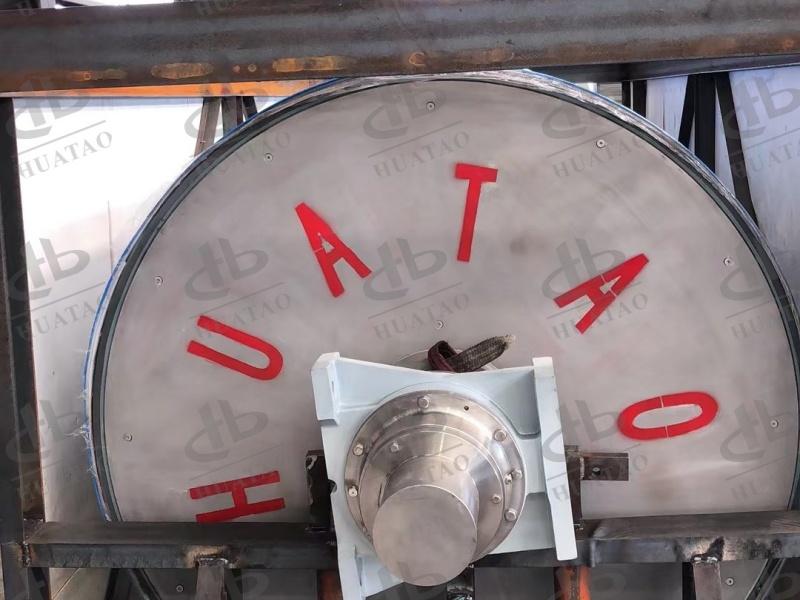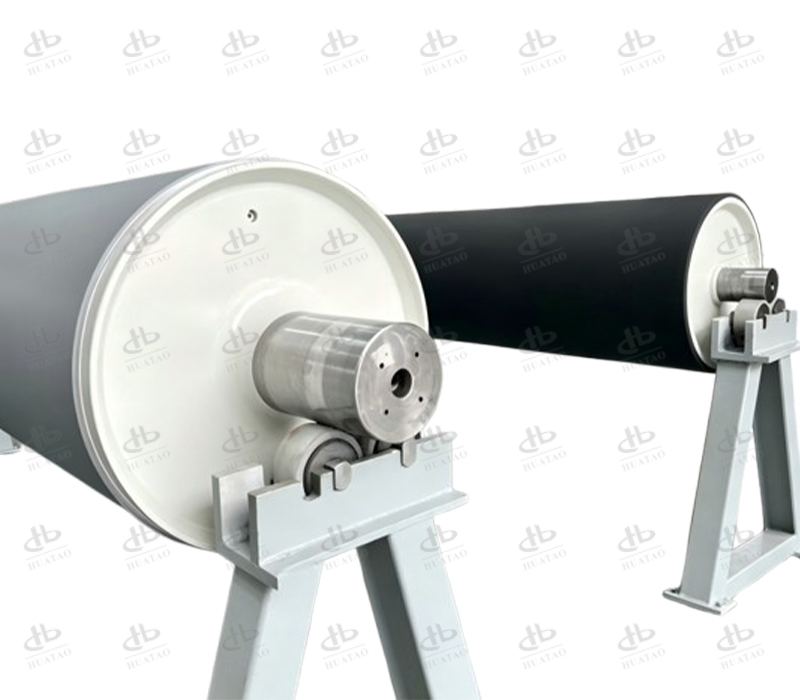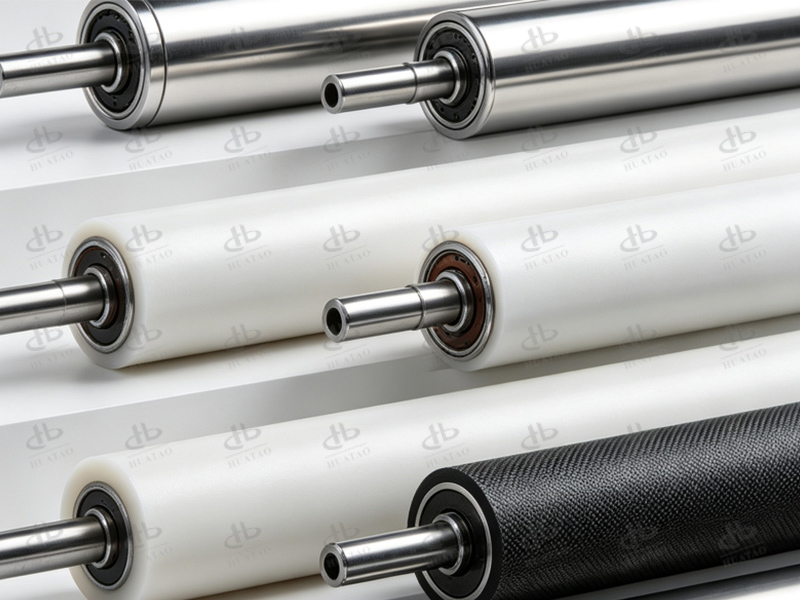
1 Overview of Prepreg Composite Materials Prepreg is a key semi-finished intermediate material in the high-end composite manufacturing industry, which is widely used in aerospace equipment, wind power generators, new energy vehicles and rail transit facilities. Although its appearance is similar to ordinary adhesive film rolls, it has ultra-light weight, ultra-high specific strength and long-term stable dimensional performance, and has become an irreplaceable core raw material for upgrading all kinds of high-performance industrial components. Prepreg is formed by fully infiltrating reinforcing fibers such as carbon fiber, glass fiber and aramid fiber with resin matrix and carrying out semi-curing B-stage treatment. During the molding process, manufacturers can directly heat and pressurize prepreg to form finished parts without on-site resin blending and dipping procedures, which greatly improves the consistency and stability of finished composite products. Its core competitive advantages are summarized as follows: The fiber orientation and resin content can be precisely controlled in the production stage; The internal void ratio of the finished material is low, with excellent comprehensive mechanical properties; Short forming cycle, which meets the demand of mass production of high-end parts; Customizable width, thickness and fiber laying mode to adapt to different process requirements of various industries. 2 Three Major Classification Standards of Prepreg Materials The overall performance of prepreg is determined by resin matrix, reinforcing fiber type and fiber laying structure. Different collocation schemes correspond to differentiated industrial application scenarios. 2.1 Classification Based on Resin Matrix: Thermoset Prepreg & Thermoplastic Prepreg 2.1.1 Thermoset Prepreg (Mainstream Market Product) After complete curing, the molecular structure cannot be melted and reconstructed, featuring stable dimensional performance and excellent mechanical strength, which is the mainstream material choice for aerospace and wind power industries. Epoxy prepreg: Balanced comprehensive performance, outstanding heat and moisture resistance and strong bonding force, suitable for aircraft fuselage, wind turbine blades and high-end sports equipment; Phenolic prepreg: Excellent heat resistance and flame retardancy, low smoke emission after combustion, applied to aircraft interior parts and marine fire-proof structural components; BMI prepreg: Stable continuous service temperature up to 250℃, matched with aero-engine shells and wing leading edge structures; Cyanate ester prepreg: Low dielectric constant and high wave transmittance, customized production for radome and satellite signal receiving components. 2.1.2 Thermoplastic Prepreg (Fast-Growing New Material Category) It supports secondary hot melting, hot repair and impact resistance, with short molding cycle, which is suitable for mass production of automobile parts and unmanned aerial vehicle components. PEEK & PEKK prepreg: High temperature and wear resistance, used for aero-engine accessories and high-end medical implant materials; PPS prepreg: Flame retardant and corrosion resistant, applied to new energy vehicle battery shells and wind power auxiliary structures; PA prepreg: Low comprehensive cost and strong toughness, widely used in automobile structural parts and drone blades. 2.2 Classification Based on Reinforcing Fiber Carbon fiber prepreg: The highest specific strength and modulus, the optimal lightweight material solution for aerospace and high-performance racing vehicles; Glass fiber prepreg: Excellent cost performance, insulation and corrosion resistance, suitable for civil building materials and ordinary automobile parts; Aramid fiber prepreg: Super anti-impact and anti-cut performance, specially used for bulletproof equipment and aviation fire partition plates. 2.3 Classification Based on Fiber Laying Structure Unidirectional prepreg: Fibers arranged in a single direction, with more than 90% strength utilization rate, suitable for main load-bearing beams and support shafts; Woven fabric prepreg: Warp and weft interweaving structure, balanced isotropic performance and flexible forming, applicable to equipment shells and complex curved parts. 3 Six Standardized Production Procedures of High-Quality Prepreg The production of high-standard prepreg requires full-process precision control. Each roll of finished material needs to go through six complete standardized processes to eliminate quality fluctuation risks: Raw material inspection: Conduct batch performance test on fiber and resin raw materials; all indexes need to be rechecked after replacing raw material suppliers; Resin modulation: Strictly control the temperature, humidity and reaction time of the modulation environment to stabilize resin viscosity and gel time, and avoid premature polymerization or damp deterioration; Resin film coating: Equipped with flat release film, matched with closed-loop tension system, heating rolland line speed control to produce uniform resin film without bubbles and cracks; Fiber dipping and lamination: Realize uniform fiber spreading and stable tension control to complete full resin infiltration without dry fiber spots, which is the core link of the whole production line; Finished product inspection: Manually check the surface for wrinkles and foreign impurities; the resin content tolerance is controlled within ±2%, the volatile content is kept below 1%~1.5%, and the viscosity and drapability meet industrial standards; Finished product storage and transportation: Sealed storage environment below 5℃ with horizontal stacking; restore to room temperature before unpacking to avoid condensation and material waste. Aerospace-grade low-porosity prepreg puts forward ultra-high requirements for processing precision. Advanced domestic prepreg production lines are equipped with electromagnetic induction heating rolls, whose surface temperature control accuracy reaches ±1℃ and machining precision reaches micron level, breaking the long-term dependence on imported high-end processing equipment. 4 Main Application Fields of Prepreg Composite Materials Aerospace industry: Epoxy, BMI and cyanate ester carbon fiber prepreg are adopted for aircraft fuselage, wings, radomes and engine high-temperature components; Wind power industry: Carbon fiber epoxy prepreg is used for main beams of large wind blades, and glass fiber prepreg for auxiliary structural parts; New energy vehicle industry: Glass fiber PA prepreg for automobile body structural parts, carbon fiber PPS prepreg for battery shells to realize lightweight and safe design; Rail transit industry: Lightweight and flame-retardant prepreg for vehicle body structures and interior accessories to reduce noise; Sports and protective equipment: Prepreg materials for golf clubs, tennis rackets and skis; aramid fiber prepreg for bulletproof vests and safety helmets. 5 Core Processing Equipment for Prepreg Production Lines The formula determines 70% of the final quality of prepreg, while production equipment determines the remaining 30%. Modern high-end prepreg manufacturing develops towards continuous, intelligent and ultra-precise direction. The whole production flow including fiber unwinding, spreading, film coating, hot pressing lamination, traction and winding realizes full closed-loop automatic control. The hot pressing section, as the core working area of the production line, is equipped with precision electromagnetic induction heating rolls, which support real-time fine adjustment of temperature, roll gap and tension, and ensure that the resin content, thickness and surface flatness of prepreg reach aerospace manufacturing standards. This complete set of production equipment supports three mainstream processes including hot melt, single-step and two-step molding, and is compatible with carbon fiber, glass fiber, aramid fiber as well as epoxy, PEEK, PPS, PA and other resin systems. It can stably mass-produce both thermoset and thermoplastic prepreg, and promote domestic composite prepreg to upgrade from ordinary functional materials to high-performance stable industrial raw materials. 6 Industry Development Prospect As a segmented composite material, prepreg is the indispensable base material for all high-end composite manufacturing. With customized formula design, stable physical properties and efficient molding technology, it continuously optimizes the strength and dead weight of industrial parts and extends service life. From large civil aircraft, offshore wind turbines to new energy passenger cars, prepreg is promoting the lightweight, high-performance and green transformation of advanced manufacturing industry. In the future, with the popularization of thermoplastic prepreg, simplification of molding process and reduction of equipment procurement cost, the application scope of prepreg will expand from high-end exclusive fields to a large number of civil manufacturing industries, and gradually become a general high-performance composite intermediate material widely used in all walks of life. High-precision silicone rolls and metal induction heating rolls can effectively improve the surface quality and overall yield of prepreg finished products. Contact Information WhatsApp: +86 17743789775 Email: sale05@huataogroup.com Official Website: https://www.huataorolls.com/induction-heating-roll.html
Read More
1 Introduction For enterprises equipped with high-speed BOPP and BOPET biaxial stretching production lines, sudden cracking and fracture of corona rolls will lead to unplanned production shutdowns, massive waste of plastic film raw materials and substantial economic losses. This article systematically sorts out three typical fracture positions of corona rolls and their corresponding mechanical inducements, elaborates the core performance advantages and complete technical parameters of high-performance silicone corona rolls, and presents global cooperative application cases, so as to help film manufacturers extend roll service life and realize stable continuous production. 2 Three Typical Fracture Positions and Root Mechanical Causes of Corona rolls 2.1 Central Fracture of roll Core This type of failure mostly occurs on rolls assembled by multiple outer steel tubes connected by welding. If the thermal assembly process is blocked during production and installation, constructors will cut the outer tube and carry out thermal assembly and secondary welding from the opposite side. Multiple welding operations and forced thermal assembly will form persistent hidden structural stress inside the roll core, which will gradually expand and cause complete core fracture after long-term high-speed rotating operation. 2.2 Crack Defects at the Connection of roll Shaft and Disc Excessive interference fit between the shaft and disc is the main inducement of this fault. The corona roll adopts double-shell water circulation cooling design; long-term circulating water will cause tiny seepage to corrode the welding seam, form invisible microcracks, and gradually expand to produce water leakage and structural fracture in the later operation stage. 2.3 Fracture at the 1/3 Axial Position of roll Core Different from the excessive interference fit problem, this fault is triggered by insufficient matching allowance. Loose assembly clearance will make the metal core bear alternating tension during long-time high-speed rotation, resulting in continuous metal fatigue, and finally produce obvious splitting cracks at the one-third position of the roll barrel length. 3 Core Performance Advantages of High-Performance Silicone Corona roll The corona roll is the core functional component of the film corona surface modification system, which undertakes the conveying work of BOPP and BOPET substrates and cooperates with the discharge electrode to generate plasma corona discharge under high voltage. The product is wrapped with imported special silicone rubber that passes strict 200KV high voltage withstand inspection. The high-quality silicone coating can realize uniform transfer of surface energy on the film, significantly improve the adhesion of ink, adhesive and coating on the substrate, and effectively eliminate peeling and bubbling defects of finished film products in subsequent printing, coating and composite processes. 4 Standard Complete Technical Parameters of Corona roll Structural form: Double-shell integrated design, water inlet and outlet ports are arranged on the same end of the rollbody Raw material matching: Inner and outer shells adopt Q345B steel; the journal and outer shell are connected by 42CrMo alloy steel interference assembly process Dynamic balance standard: G2.5 grade, matching the maximum production line speed of 630 m/min Silicone coating index: Coating thickness 4 mm, rubber hardness 75–80 Shore A, surface roughness Ra1.6 μm Precision tolerance: Overall runout ≤0.10 mm, cylindricity ≤0.10 mm Dielectric performance: Stable continuous operation under 200KV high voltage environment 5 Global Production Line Application Cases The enterprise has supplied customized corona roll products to more than 100 BOPP and BOPET complete production lines covering over 10 countries and regions worldwide, and has established long-term cooperative relations with many well-known film manufacturing groups. After replacing the original old rolls with our optimized corona roll products, the comprehensive operating efficiency of the film stretching production line of all cooperative customers has increased by 5% to 10%, and the defective product rate and daily equipment maintenance frequency have been significantly reduced. 6 Customized Technical Service Support The professional engineering team provides one-stop customized matching services for corona rolls, and can formulate targeted product schemes according to the actual production line speed, film processing width and process characteristics of customers. Customers can consult technical drawings, parameter comparison and detailed quotation at any time. Contact Information Email: sale05@huataogroup.com Mobile / WhatsApp: +86 17743789775 Official Website: www.huataorolls.com
Read More
1 Overview of 2026 Global Soft Packaging Industry Development Trend Driven by lightweight transformation, recyclable material policy and high-barrier film market demand, the overall scale of the global flexible packaging industry maintains steady growth momentum. High-precision processing rolls are core supporting components throughout the whole film production flow, which directly affect finished film quality, equipment continuous operation rate and coating uniformity. This article summarizes the main market growth points of the soft packaging industry in 2026, sorts the standard roll configuration of each production section, and introduces a full range of customized roll products that can adapt to mainstream international film stretching equipment. 2 Main Growth Drivers of Soft Packaging Market E-commerce and food catering packaging demand expansion: The market puts forward higher requirements for lightweight and high-strength flexible packaging materials; Popularization of recyclable mono-material films: PP and PE recyclable films become the mainstream development direction of packaging substrates; Rapid expansion of optical and functional film market: BOPET films for display, solar energy and insulation fields gain continuous market increment; Rapid capacity expansion of lithium battery wet-process separator production lines: New energy industry brings stable demand for special film processing equipment; Wide application of shrink film and stretch film in logistics and industrial packaging scenarios. Among various packaging substrate materials, BOPP film still occupies an irreplaceable core position in food, cigarette, textile and food confectionery packaging fields. 3 Complete Matching roll Types for Each Section of Soft Packaging Production Line 3.1 Casting Section Supporting rolls Chill roll is the core equipment of CPP, BOPP, BOPET and optical film casting processes. The matching supporting rolls supplied by the enterprise include chill roll, water tank flow roll, dehydration nip roll and stripping roll, which complete the film forming and preliminary cooling work in the casting link. 3.2 MDO Longitudinal Stretching Section Supporting rolls The MDO section is equipped with preheating roll, nip roll and stretching roll. The first six rolls after preheating belong to high-wear parts. For BOPET optical film production lines, double-layer solid silicone cladding rolls are adopted, with rubber hardness controlled at 70–80 Shore A, stable heat resistance up to 200 Celsius degrees and excellent ozone resistance performance. 3.3 Traction Surface Treatment Section Supporting rolls This section includes PRS cooling roll, corona treatment roll, corona nip roll and flame treatment roll. Corona treatment roll: Made of special silicone rubber, with 200,000V high voltage and ozone resistance, hardness 70–80 Shore A, surface roughness Ra ≤1.6μm, which effectively avoids backside treatment and stabilizes film surface dyne value; PRS cooling roll: Adopts double-shell single and double flow channel structure, the conventional specification is Φ450×8600mm, which eliminates thermal deformation of film before winding; Flame treatment roll: Matched with paper and PE composite production lines, made of special stainless steel alloy with NiCr anti-corrosion coating and internal water cooling structure. 3.4 Winding Section Supporting rolls Carbon fiber contact roll and carbon fiber tension roll, as well as heavy-duty winding cores are the standard configuration of the winding link. The carbon fiber contact roll for BOPP and BOPET lines adopts 14–16mm thick EPDM cladding, with diamond groove design, 1.6mm crown height and G2.5 dynamic balance standard. 3.5 Auxiliary Processing Supporting rolls In addition to the core rolls of film stretching lines, the enterprise also supplies special rolls for slitting machines, film extrusion equipment and metalizing composite machines to meet the full-process supporting demands of post-processing links. 4 Full-Series Industrial roll Product System and Manufacturing Standards 4.1 Compatible Mainstream Film Equipment Brands All roll products can perfectly match complete production lines manufactured by Bruckner, Dornier, Colines, Mitsubishi, Doriner, Reifenhauser and SMT. 4.2 Complete Product Line Coverage Cooling series rolls: Water bath chill roll, double-shell 3OS/2OS cooling drum; MDO processing rolls: Preheating roll, stretching roll, all types of nip rolls with silicone, EPDM and Hypalon coating; Surface treatment equipment: Corona rolland matched electrode accessories; Post-processing rolls: Laminating roll, coating roll, carbon fiber contact roll, slitter special roll. 4.3 Surface Coating Optional Schemes Hard chrome coating (thickness more than 120μm, hardness HV750 and above), ceramic coating, tungsten carbide coating, Teflon coating, silicone rubber, EPDM and Hypalon elastic coating can be selected according to different process environments. 4.4 Unified Manufacturing Quality Standards Product runout controlled within 0.01–0.1mm, all rolls pass G2.5 dynamic balance detection, long-term stable working temperature up to 200 Celsius degrees, and the inner barrel adopts welded spiral double-shell flow channel structure for uniform heat exchange. 5 Core Advantages of Choosing Our Customized roll Solutions Comprehensive cost control advantages: Optimized structural design reduces long-term maintenance and replacement cost for customers; Stable fast delivery cycle: Complete production chain shortens equipment delivery waiting period; One-stop OEM and reverse engineering service: Custom processing can be carried out according to old rolldrawings and on-site equipment parameters; Targeted customized design: Formulate exclusive coating and structural schemes according to specific film materials and production line working conditions, reaching European equipment quality standards with localized flexible pricing system. 6 Customized Consultation Service Whether customers need to upgrade old BOPP and BOPET production lines, solve the problem of short service life of MDO nip rolls, or build new CPP and lithium battery separator film complete lines, the technical team can provide professional coating selection guidance, structural design scheme and full roll manufacturing supporting services. Contact Information Jenny Liu Mobile / WhatsApp: +86 17743789775 Email: sale05@huataogroup.com Official Website: www.huataorolls.com
Read More