EN
induction heat calender roll

induction heat calender roll

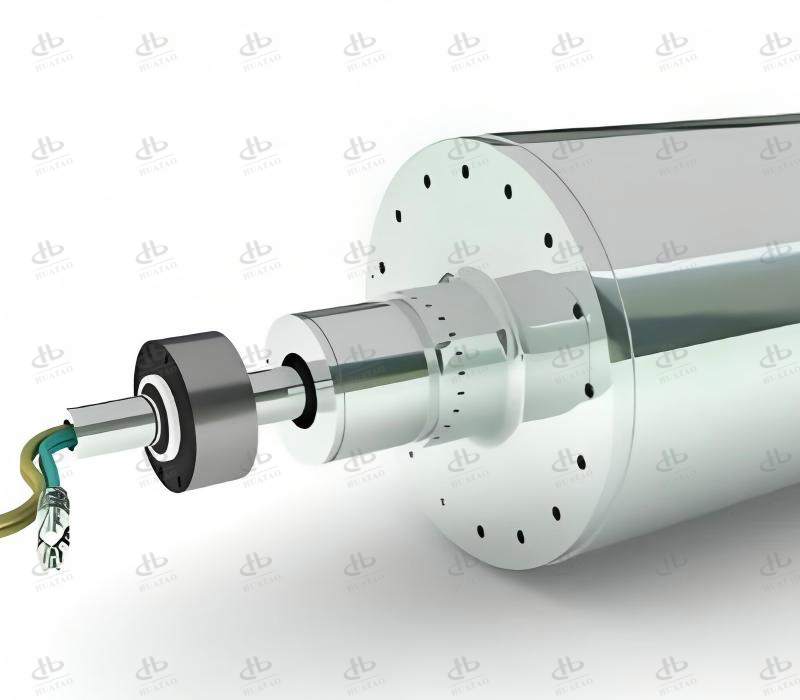
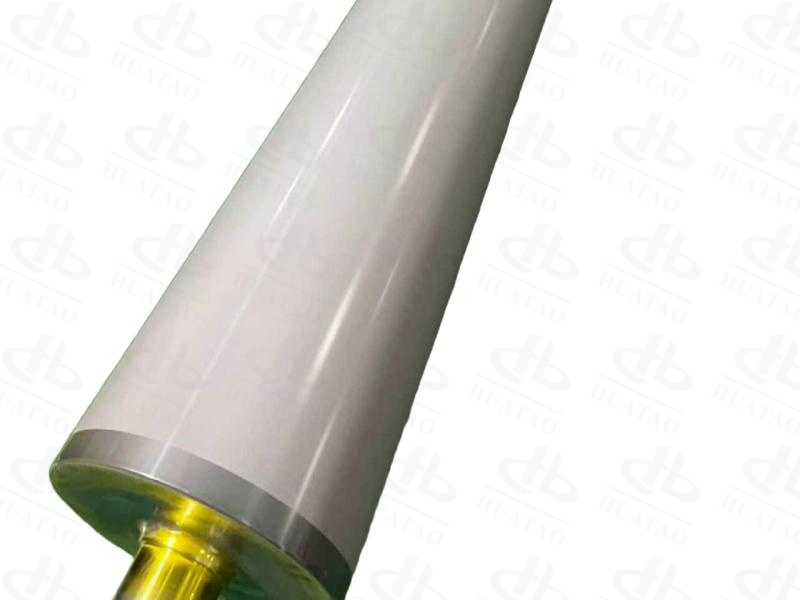
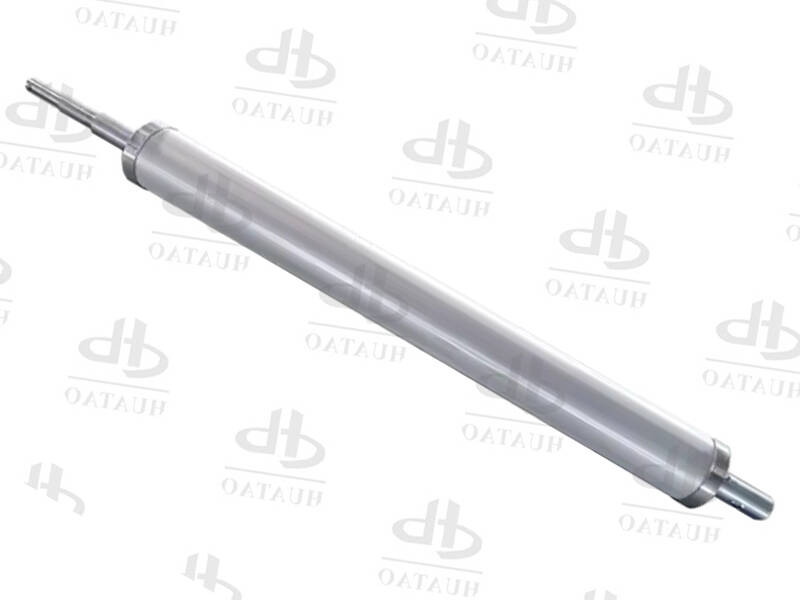
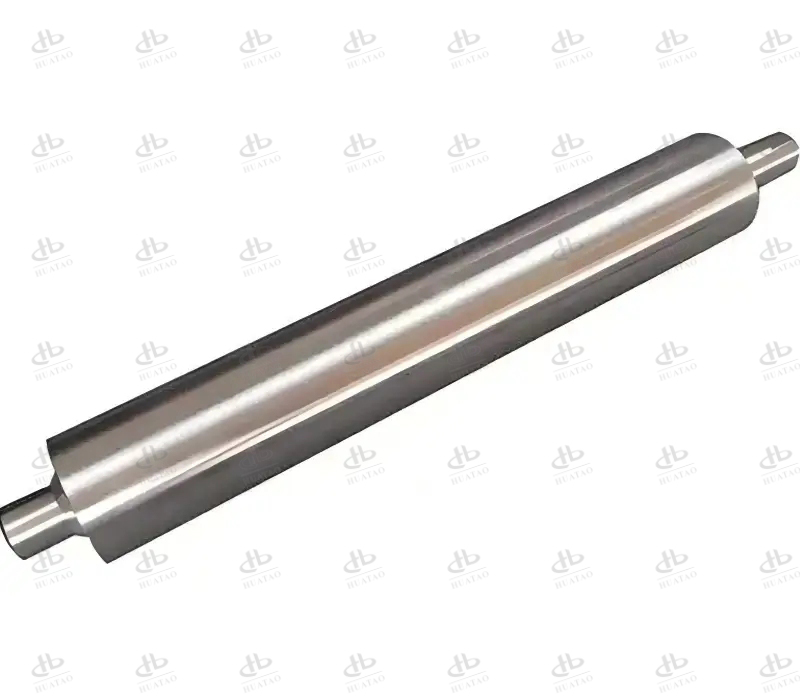
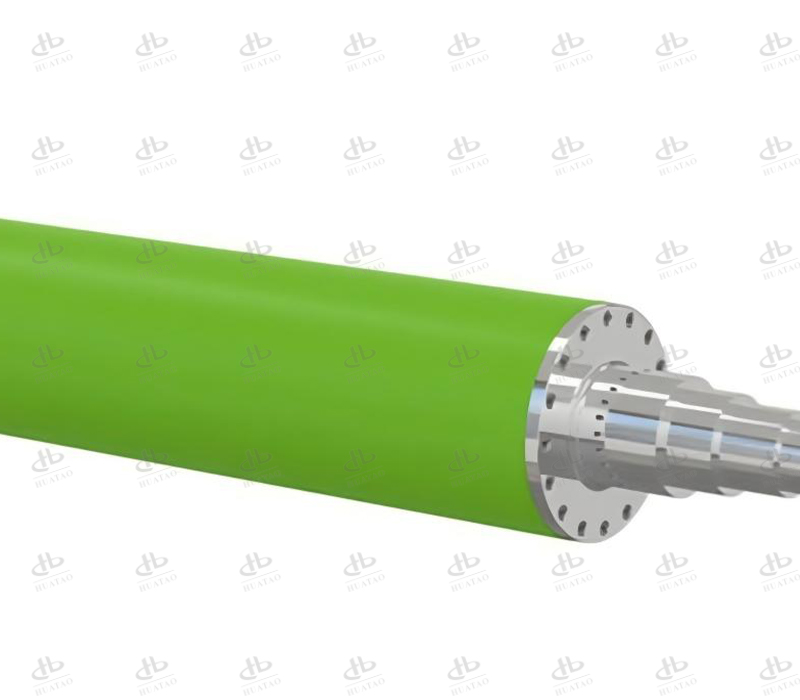
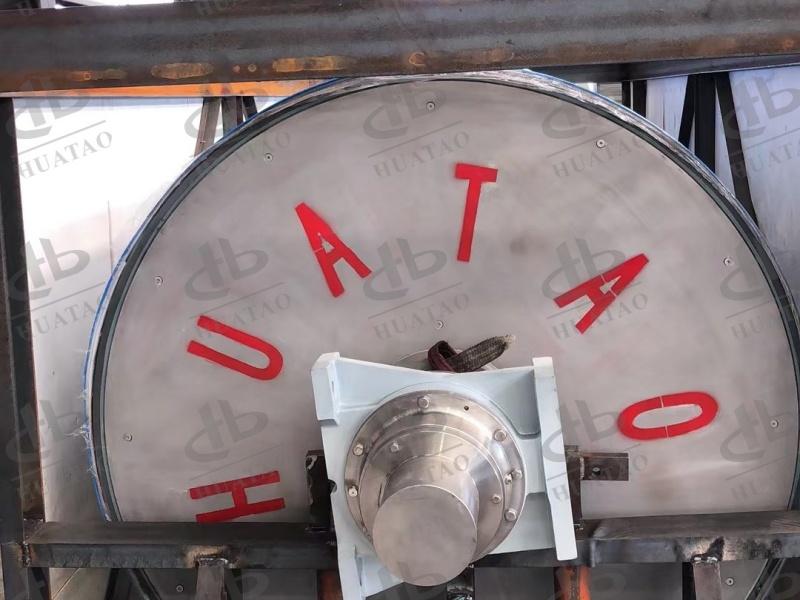
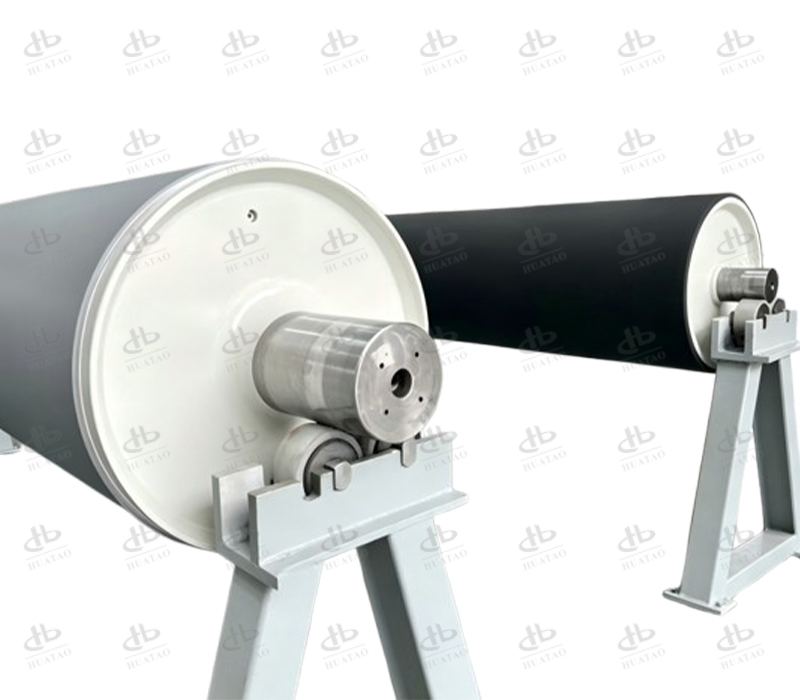
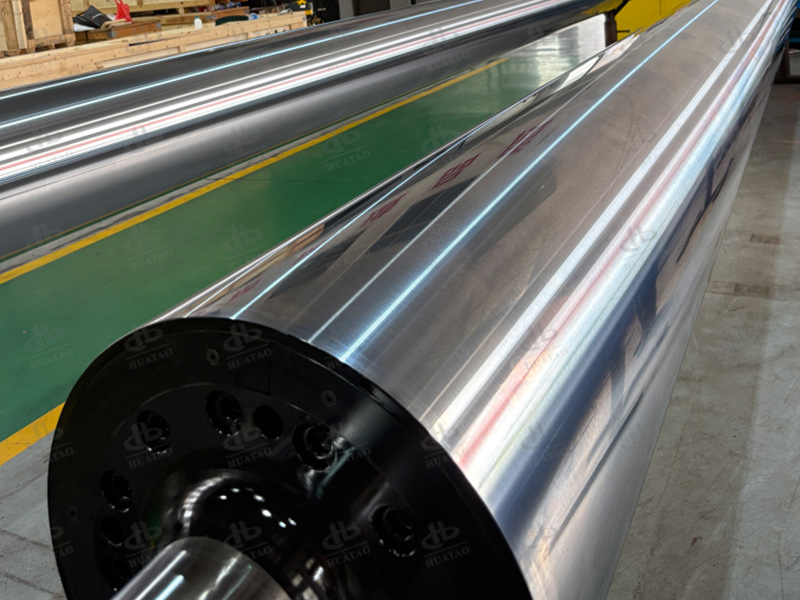
The Induction Heated Calender Roll is a high-performance process roller designed for thermoplastic prepreg, UD tape, and continuous fiber reinforced thermoplastic (CFRTP) production lines. Utilizing advanced electromagnetic induction heating technology, the roller delivers rapid, uniform, and precisely controlled surface heating without the need for thermal oil or internal electric heating elements. It provides stable nip temperatures for resin melting, laminate consolidation, and thickness calibration, ensuring excellent fiber impregnation and superior product consistency. Compared with conventional heating systems, induction heating offers faster thermal response, higher energy efficiency, lower maintenance requirements, and improved temperature uniformity. Our induction heated calender rolls are engineered for demanding applications involving PEEK, PPS, PEI, PA, and other engineering thermoplastics, helping manufacturers achieve higher productivity, better laminate quality, and long-term operational reliability.
Parameters

Product Details Description

Precision Induction Heated Calender Roll for Thermoplastic Composite Manufacturing

The Induction Heated Calender Roll is a core process component in advanced thermoplastic composite manufacturing. During thermoplastic prepreg production, molten resin must be uniformly distributed throughout the continuous fiber reinforcement while maintaining precise thickness and excellent surface quality. This process requires accurate temperature control, stable pressure distribution, and high mechanical precision.

Unlike conventional heated rollers that rely on thermal oil circulation or cartridge heaters, induction heated calender rolls generate heat directly within the roller body through electromagnetic induction. This allows the roller surface to reach the target temperature rapidly while maintaining exceptional temperature uniformity across the working width.

The result is improved resin flow, better fiber wet-out, consistent laminate consolidation, and significantly reduced thermal response time.

Our induction heated calender rolls are specifically designed for high-performance composite production, including thermoplastic prepreg, carbon fiber UD tape, organosheet manufacturing, continuous fiber reinforced thermoplastic (CFRTP), and automated composite production systems.

With advanced thermal engineering, precision machining, and intelligent temperature control, the roller delivers stable performance even in continuous high-speed manufacturing environments.


Product Features & Advantages

1. Advanced Electromagnetic Induction Heating Technology

The roller utilizes electromagnetic induction to generate heat directly within the roller shell rather than transferring heat from external sources.

Compared with conventional heating systems, induction heating provides:

  • Rapid heating and cooling response;
  • High thermal efficiency;
  • Uniform surface temperature;
  • Reduced energy consumption;
  • Precise temperature control.

The system eliminates the need for thermal oil circulation, reducing maintenance costs while improving production efficiency.

2. Uniform Temperature Distribution

Temperature consistency is essential for producing high-quality thermoplastic prepregs.

Our induction heated calender rolls feature optimized electromagnetic coil design and thermal distribution technology to ensure:

  • Uniform heating across the entire roller face;
  • Stable processing temperature;
  • Consistent resin viscosity;
  • Improved laminate thickness control;
  • Reduced thermal gradients.

This helps prevent common production defects such as uneven impregnation, resin-rich areas, and thickness variation.

3. High-Efficiency Laminate Consolidation

The induction heated calender roll simultaneously applies controlled heat and pressure during the calendering process.

Key process benefits include:

  • Improved resin penetration into fiber bundles;
  • Enhanced laminate density;
  • Reduced void content;
  • Better fiber-resin bonding;
  • Excellent dimensional stability.

The roller is particularly suitable for high-performance engineering thermoplastics with high melting temperatures.

4. High Precision Roller Manufacturing

Every roller is manufactured using advanced CNC machining and precision grinding equipment.

Critical manufacturing controls include:

  • Excellent cylindricity;
  • Low runout accuracy;
  • Precision dynamic balancing;
  • Mirror-quality surface finishing;
  • Stable concentricity.

These precision characteristics ensure smooth operation under continuous high-speed production conditions.

5. Energy Saving and Low Maintenance

Compared with conventional thermal oil heating systems, induction heating offers significant operational advantages:

  • Faster production start-up;
  • Lower energy consumption;
  • No thermal oil leakage;
  • Reduced maintenance requirements;
  • Cleaner production environment.

The non-contact heating method also minimizes mechanical wear on the heating system, improving long-term reliability.

6. Customized Engineering Solutions

Different composite production lines require different operating conditions.

We provide customized induction heated calender rolls according to:

  • Product width;
  • Production speed;
  • Operating temperature;
  • Nip pressure;
  • Composite material type;
  • Installation configuration.
Optional features include:
  • Multi-zone independent temperature control;
  • Closed-loop PID temperature control;
  • Infrared temperature monitoring;
  • Integrated cooling systems;
  • Intelligent PLC communication interfaces.

These custom solutions ensure optimal performance in both laboratory-scale development and large-scale industrial production.


Product Technical Parameters

Parameter Specification
Product Name Induction Heated Calender Roll
Application Thermoplastic prepreg, UD tape, CFRTP, organosheet production
Compatible Materials PEEK, PPS, PEI, PA, LCP, engineering thermoplastics
Fiber Types Carbon fiber, glass fiber, aramid fiber, basalt fiber
Roller Diameter Ø150 mm – Ø1000 mm (Customizable)
Roller Face Length 300 mm – 6000 mm (Customizable)
Heating Method Electromagnetic induction heating
Surface Temperature Range Ambient to 450°C
Temperature Uniformity ±0.5°C across the working width
Temperature Control Accuracy ±0.5°C
Heating Response Rapid heating with short start-up time
Roller Material Forged alloy steel, stainless steel
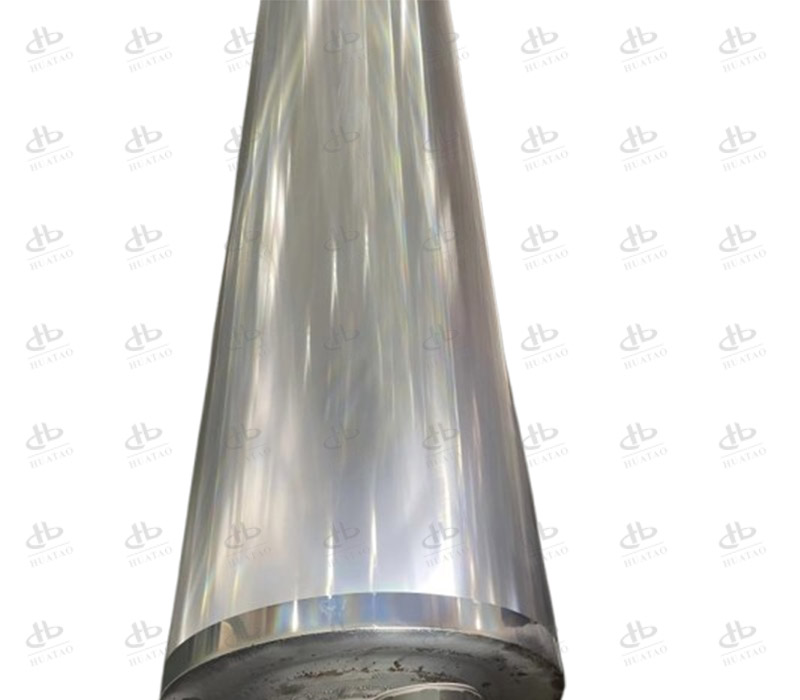
Surface Finish Mirror polished
Surface Roughness Ra ≤0.2 μm (customized available)
Runout Accuracy ≤0.01–0.02 mm
Dynamic Balance Grade G2.5 / G1.0 (optional for high-speed applications)
Surface Treatment Hard chrome, ceramic coating, tungsten carbide, anti-stick coating
Cooling Options Air cooling or integrated water cooling (optional)
Control System PID temperature controller, PLC communication, HMI integration
Installation Type Fixed shaft or customized mounting configuration


Typical Applications

  • Thermoplastic Prepreg Production Lines
  • Carbon Fiber UD Tape Manufacturing
  • Continuous Fiber Reinforced Thermoplastic (CFRTP) Production
  • Organosheet Manufacturing
  • Aerospace Composite Materials
  • Automotive Lightweight Components
  • Hydrogen Storage Tank Materials
  • Industrial Composite Lamination Systems
icon Related News icon

Related News

PRS Cooling Rolls Specialized Cooling Equipment for BOPP, BOPET and BOPA Tra

1 Introduction For enterprises equipped with biaxially oriented film production lines, stable and uniform cooling treatment after transverse stretching (TDO) is a key factor to guarantee film dimensional stability, surface flatness and consistent mechanical indexes. PRS cooling roll is the core cooling component installed in the traction section of the production line. In the standard film stretching process, three types of PRS cooling rolls will be used in matching sequence. This paper systematically expounds three surface treatment schemes for PRS cooling rolls, analyzes the hidden danger of ozone corrosion to conventional rolls, lists complete standardized technical parameters, and shares mass application cases in global film manufacturing workshops. 2 Three Types of PRS Cooling rolls Matching Different Process Segments Three differentiated surface treatment processes are developed to adapt to different working environments of each node on the film stretching line. The maximum applicable film width of all three roll types reaches 10.6 meters, and the supporting operating speed can be adjusted according to production demands. 2.1 Hard Chrome Plated PRS Cooling roll The roll surface adopts thick hard chrome electroplating process. The product features outstanding wear resistance and fast heat exchange efficiency. It is specially configured for the working section immediately after TDO transverse stretching equipment, with a maximum matching line speed of 600 m/min. 2.2 Anti-Stick Coated PRS Cooling roll The surface is covered with special non-adhesive functional coating, which can effectively avoid the adhesion phenomenon of hot soft film on the roll surface and eliminate surface sticking defects of finished products. It is suitable for the middle traction area after primary cooling, and the maximum applicable line speed is 650 m/min. 2.3 Ozone Anti-Corrosion PRS Cooling roll The whole roll body is made of anti-corrosion stainless steel substrate, which can resist oxidative damage caused by ozone generated during corona discharge. It is installed behind the corona treatment equipment, with a maximum operating speed of 650 m/min. All three series of PRS cooling rolls can be perfectly matched with the production processes of BOPP, BOPET, BOPA film and adhesive tape. 3 Ozone Corrosion Risk Analysis of Ordinary Cooling rolls In the corona surface modification procedure, high-voltage discharge will produce a large amount of ozone with strong oxidizing property. If ozone permeates the surface coating of ordinary chrome cooling rolls, long-term operation will cause chemical corrosion, resulting in bubbling, blistering and complete peeling of the coating. It is necessary for production management personnel to pay attention that simple surface recoating cannot solve the permanent structural damage caused by ozone corrosion. Once such failure occurs, the whole cooling roll must be replaced. Partial surface repair will lead to repeated coating shedding and unplanned production shutdown losses. 4 Complete Standard Technical Parameters of PRS Cooling roll All PRS cooling rolls adopt double-shell circulating water cooling structure, and the water inlet and outlet are arranged on the same end of the roll body: 1.Raw material configuration: The inner and outer barrels are made of Q345B structural steel, and the outer barrel is assembled by precision interference fit process. 2.Internal flow channel: Independent water flow pipeline can be customized according to the layout of each customer’s production line. 3.End structural parts: The driving side is equipped with high-strength low-carbon alloy steel forged flange and solid roll shaft; the operation side adopts alloy forged flange and shaft head, fixed by interference fit and full welding. 4.Precision tolerance standards: Out-of-roundness ≤0.1 mm, cylindricity ≤0.1 mm. 5.Dynamic balance grade: G2.5, which can adapt to the maximum production line speed of 630 m/min. 6.Optional surface treatment processes: Hard chrome plating, anti-stick functional coating, ozone-resistant anti-corrosion coating. 5 Global Industrial Application Cases The company has provided customized PRS cooling roll supporting schemes for more than 100 complete BOPP and BOPET production lines covering more than 10 countries and regions around the world, and has established long-term stable cooperative relations with many well-known film manufacturing groups. After replacing the old cooling equipment with our PRS cooling rolls, the film stretching process of all cooperative customers is optimized, and the overall production efficiency is increased by 5% to 10%. 6 Customized Equipment Matching Service For manufacturers who need to build new biaxial film production lines or carry out old roll replacement transformation, the professional engineering team can provide one-to-one parameter matching, personalized structural design and full-cycle technical support services. Contact Information Jenny Liu Mobile / WhatsApp: +86 17743789775 Email: sale05@huataogroup.com Official Website: www.huataorolls.com
Read More

Principle, Structure and Performance Comparison of Electromagnetic Induction Heating Rolls for Film, Fiber and Composite Processing

1 Overview of Electromagnetic Induction Heating roll Electromagnetic induction heating roll is a self-heating cylindrical core equipment specially used for continuous processing of various industrial substrates such as polymer film, carbon fiber, prepreg and paper. Its core heating principle depends on built-in induction coils. After being energized, alternating electromagnetic fields are generated, and magnetic lines cut the metal roll shell to produce uniform Joule heat inside the roll body. A complete closed-loop temperature control system is equipped to stabilize the roll at the set temperature value, so as to realize stable heat exchange with passing materials. This type of heating roll is widely applied in PVC forming, chemical fiber spinning, composite lamination, material drying and inorganic film stretching production procedures. Compared with traditional thermal oil and water heating rolls, it has prominent advantages in temperature uniformity, environmental protection and operation safety, and has become an indispensable heating component for high-temperature and high-precision material manufacturing. The only limitation is its higher one-time manufacturing cost than oil heating rolls, which restricts its full popularization in the market at this stage. 2 Two Main Structural Classification of Induction Heating roll According to different supporting structures at both ends, induction heating rolls are divided into single-shaft type and double-shaft type to adapt to diversified production process demands. 2.1 Single-shaft Induction Heating roll This product is supported only by one end, and is mostly applied in chemical fiber spinning equipment, as well as drying and stretching production lines of special plastic films. It can be manufactured into integrated structure, split structure or integrated structure matched with driving motor. The standard assembly consists of induction coil group, roll shell, transmission support assembly and temperature detection components. 2.2 Double-shaft Induction Heating roll The double-shaft roll is supported at both ends, equipped with left and right end covers, built-in heating coils and temperature sensing devices. It has a wider range of applicable scenarios, including calendering, surface polishing, material leveling, drying, composite pressing, thermoforming and heat transfer printing. In terms of internal heating layout, there are two technical routes: built-in coil heating and external coil heating. The built-in coil scheme occupies the absolute mainstream position in the industry due to higher heating efficiency, better safety and more accurate temperature control, and more than 99% of industrial products adopt single built-in coil layout. The products developed by our factory adopt this mature design consistent with Japan’s Tokuden brand. 3 Multi-mode Temperature Detection and Signal Transmission System 3.1 Two Types of Temperature Measurement Methods Direct contact temperature measurement K-type thermocouple or PT100 resistance sensors are embedded inside the rollwall to collect real-time temperature data. Among them, K-type thermocouple has lower component cost but needs to be matched with special compensation wires; PT100 sensor has higher data stability with slightly higher procurement cost. Indirect non-contact temperature measurement Infrared temperature measurement: Based on blackbody radiation principle, it is easily interfered by rollsurface roughness, surface dirt, detection distance and angle, resulting in obvious measurement errors. Air temperature measurement: Mainly used for split single-shaft rolls in chemical fiber workshops. Sensors are placed in reserved grooves on the rollend face to detect air temperature changes, and the control system adjusts coil current through PID algorithm to stabilize heating power. 3.3 Three Common Temperature Measuring Positions Air temperature measurement: Widely adopted in chemical fiber stretching production lines rollwall temperature measurement: Drill detection holes of different lengths on the roll barrel for deep temperature collection rollsurface temperature measurement: Realized by infrared or contact thermocouple, with poor stability and rarely used in formal mass production 3.4 Two Signal Transmission Modes Direct signal transmission: The original signals of thermocouple and PT100 are directly transmitted to the PLC temperature controll Converted signal transmission: The original temperature data is converted into standard 4-20mA industrial signals before output, which supports wired and wireless transmission. Wireless transmission is not recommended for rotating rolls due to the need for independent battery power supply. 4 Comprehensive Performance Comparison Between Induction Heating roll and Thermal Oil Heating roll Comparison Dimension Electromagnetic Induction Heating roll Thermal Oil / Electric Heating roll Surface Temperature Uniformity Temperature deviation controlled within ±0.5~1℃ Surface temperature difference exceeds ±4℃ Temperature Control Precision Full digital PLC closed-loop control with high regulation accuracy Long oil pipeline leads to large temperature difference between two ends, difficult to adjust flexibly Maximum Sustainable Temperature Stable operation up to 400℃ Maximum working temperature limited to 240℃ Thermal Energy Utilization Rate Over 95% heat efficiency, power consumption reduced by up to 60% Only about 60% heat utilization rate with serious energy loss Heating Acceleration Speed Rise to 200℃ within 30 minutes It takes 90 minutes to reach 200℃ Remote Control Function Reserved communication interface for remote data viewing and parameter adjustment No built-in remote control module Production Environment Impact Oil-free and pollution-free, clean workshop operation Thermal oil leakage and volatilization risks exist, with potential fire hazards Operational Safety Internal magnetic heating structure, stable and reliable long-term operation Oil pipelines are easy to block, causing unexpected production shutdown Floor Space Requirement No external supporting pipelines, compact overall structure Matching oil temperature machine and complex pipelines occupy large workshop area Average Service Life Stable operation for more than 10 years Average service life only 3 to 5 years Procurement Cost Higher initial investment cost Low upfront purchase price 5 Customized Heating roll Matching Service For manufacturers engaged in plastic film, non-woven fabric, carbon fiber, prepreg, industrial paper and composite material production, our engineering team can design exclusive electromagnetic induction heating roll solutions according to the actual production line speed, target working temperature and installation size limits of customers. Contact Information Jenny Liu WhatsApp / Mobile: +86 17743789775 Email: sale05@huataogroup.com Official Product Page: https://www.huataorolls.com/induction-heating-roll
Read More

MDO Preheating Rolls Key Heating Components for BOPP and BOPET Biaxial Film Stretching Production Lines

1 Introduction For enterprises equipped with biaxially oriented plastic film production lines, MDO preheating roll is an indispensable core heating component in the longitudinal stretching section. Standardized and stable preheating treatment is the premise to realize uniform longitudinal stretching of film substrates, which can comprehensively optimize the physical properties of finished films and improve the market competitiveness of packaging film products. This paper systematically expounds the core processing value of MDO preheating rolls, three customized surface coating types, complete precision manufacturing standards, and a full series of alternative heating roll products for multiple industries. 2 Core Processing Functions of MDO Preheating rolls The MDO preheating roll is installed at the front end of the longitudinal stretching section of polyfilm production equipment, which evenly heats the raw film before stretching. The moderate thermal softening effect enables the film to complete uniform plastic deformation in the subsequent stretching process, bringing three obvious quality improvements to finished products: First, the tensile strength and rigidity of the film are significantly improved, and the finished film can maintain stable performance in multiple secondary processing links without damage. Second, the optical performance indicators such as transparency and surface gloss of the film are optimized, which greatly improves the appearance quality and added value of packaging film products. Third, the film has better heat sealing performance and ink adsorption capacity, which expands the applicable scenarios of finished products in printing, compound and other post-processing procedures. 3 Three Optional Surface Coating Types for MDO Preheating rolls Different surface coating processes are matched according to the production parameters of BOPP and BOPET film lines to meet differentiated production demands: 1.Teflon coated MDO preheating roll Applicable to BOPP film production lines, the standard specification range is 614mm × 900mm to 614mm × 1500mm, with anti-adhesion and easy-release surface characteristics. 2.Hard chrome plated MDO preheating roll Adopts the same size specification as Teflon coated rolls, suitable for high-load continuous BOPP stretching production, with high wear resistance and long service life. 3.Ceramic coated MDO preheating roll Mainly used for wide-width BOPET film production lines, the mainstream standard specification is Φ350mm × 3300mm, with excellent high temperature and oxidation resistance. 4 Complete Precision Technical Parameters of MDO Preheating rolls All MDO preheating rolls adopt heavy-duty double-shell integral structure and strict precision control to adapt to long-term high-speed continuous operation: The inner and outer barrels, side discs and roll shafts are all made of Q345B steel, and the shaft and disc components are processed by interference assembly and full welding process. Independent welded heat circulation channels are reserved between the inner and outer shells to ensure uniform heat distribution on the whole roll surface. Geometric precision indicators: total runout ≤0.01mm, cylindricity ≤0.01mm; dynamic balance grade reaches G2.5 to eliminate vibration under the maximum operating speed of the production line. 4.1 Parameter Index of Two Main Surface Coatings 1.Hard chrome coating Coating thickness range: 150μm–200μm; surface hardness: HRC 68–70; surface roughness Ra: 0.01μm–0.02μm 2.Teflon coating Optional green or black coating surface; hardness index: HB 220–250 V; coating thickness: 80μm–100μm; standard roughness Ra: 0.1μm–0.4μm; ultra-smooth customized Ra range 0.03μm–0.4μm is available for special process demands. 5 Full Range of Supporting Industrial Heating roll Products In addition to MDO preheating rolls dedicated to biaxial film stretching, the company supplies diversified heating roll products covering multiple processing industries to meet cross-industry equipment matching demands: Induction heating rolls: with low energy consumption and low maintenance frequency, with high safety performance in long-term operation Steam dryer cylinders: customized supporting equipment for various paper production lines Oil-water circulation heating rolls: general heating components for all kinds of flexible web processing equipment Thermal oil calender rolls: special heating equipment for hot forming of nonwoven fabrics 6 Customized Equipment Matching Service As a comprehensive professional heating roll manufacturer, we provide integrated services including customized design, production manufacturing and after-sales technical support for all types of thermal processing rolls. Customers can submit production line operating parameters, film material types and required roll dimensions to obtain exclusive technical drawings and preferential quotation schemes. Contact Information Jenny Liu Mobile / WhatsApp: +86 17743789775 Email: sale05@huataogroup.com
Read More

High-Speed Steel Winding Cores and PU Pope Reel Rolls for Biaxial Film and Paperm

1 Overview of Winding Core and Pope Reel Roll The winding core, also named pope reel roll, serves as the core rotary component in the take-up section of film and papermaking production lines. It bears the highest linear running speed among all equipment rolls on the whole production line, with a maximum operating linear velocity reaching 3000 m/min. The main body of the product is made of seamless steel pipe, and two surface treatment schemes of hard chrome electroplating and elastic rubber coating are provided for customers to select, which can fully match the production demands of plastic film and papermaking industries. 2 Two Main Product Series and Technical Specifications 2.1 Heavy-Duty Steel Winding Cores for Biaxial Film Production This series of steel winding cores is customized for winding procedures of BOPP, BOPET, BOPA and capacitor films, with ultra-wide customizable dimensions and strict precision control standards. Customizable length range: 30 mm to 15000 mm Maximum outer diameter: Φ2000 mm Applicable spindle rotating speed: 20 rpm to 3000 rpm Single product weight range: 20 kg to 40000 kg Straightness tolerance: 0.02 mm/m to 0.2 mm/m Radial runout and end face runout: controlled within 0.02 mm to 0.2 mm Dynamic balancing standard: fully compliant with ISO1940 international specification Each steel winding core will undergo internal boring processing to balance the wall thickness distribution, so as to eliminate structural defects such as long-term bending deformation. Hard chrome plating is the preferred surface treatment solution for BOPET and capacitor film production workshops. The hardened surface can maintain scratch-free state after long-term repeated slitting and winding work, effectively extending the service cycle of the roll. Common standard sizes of film winding cores include 450×7200mm, 550×6700/7400/7600/8200/8600mm, 655×9200/9600mm, 800/850×11200mm. 2.2 PU Pope Reel Rolls for Papermaking Equipment The pope reel roll adopts friction winding structural design and is specially developed for various continuous paper production lines. Two PU surface types are designed to adapt to different production line speed standards. 1.Grooved PU pope reel roll The surface groove design can effectively improve friction coefficient and accelerate air exhaust between paper layers during winding, which is the matching roll for high-speed papermaking machines. 2.Smooth non-groove PU pope reel roll The simple smooth surface structure is suitable for medium and low-speed papermaking production lines with ordinary winding tension requirements. 3 Customized Matching Service Introduction The company can provide targeted customized manufacturing schemes for manufacturers with different production demands. For enterprises producing biaxial films and capacitor films, high-precision steel winding cores with complete specifications can be supplied; for factories producing tissue paper, kraft paper, printing paper and fluting paper, matched PU pope reel rolls are available. The team has accumulated more than 18 years of service experience in global film and papermaking industries, and can provide one-stop equipment matching technical support for customers. Contact Information Jenny Liu Mobile / WhatsApp: +86 17743789775 Email: sale05@huataogroup.com
Read More

High Temperature Silicone MDO Nip Rollers for BOPP and Biaxial BOPET Film Stretching Equipment

1 Preface The MDO longitudinal stretching section is the core processing segment that determines the flatness, thickness uniformity and overall quality of biaxial oriented plastic films. As the key pressure-bearing component inside this working area, MDO nip rolls directly affect the consistency of film stretching under high-temperature operating conditions. This paper focuses on high-precision silicone-coated MDO nip rolls that match mainstream international film stretching equipment brands, and systematically sorts out product advantages, two dedicated product series and flexible structural schemes for reference by film production engineers and procurement personnel. 2 Core Performance Advantages of Silicone MDO Nip rolls All MDO nip roll products adopt imported high-temperature resistant silicone rubber as the surface cladding material, with multiple irreplaceable industrial comprehensive performance indicators. The products are manufactured according to ultra-precision machining standards, featuring stable high-temperature resistance, excellent elastic recovery ability, and no permanent deformation after long-term continuous compression work. This series of rolls can be perfectly matched with complete production lines manufactured by well-known brands including Bruckner, Mitsubishi, DMT and Dornier, and have provided stable and continuous processing performance for a large number of film manufacturing enterprises all over the world. 3 Two Specialized MDO Nip roll Product Series Two targeted product lines are developed respectively for BOPP and BOPET film production lines, with independent dimension specifications and complete technical indicators to adapt to different stretching technological standards. 3.1 MDO Nip roll for BOPP Film Production Lines Available standard dimensions: 130×1220mm / 130×1420mm / 130×1500mm, 150×1000mm / 150×1300mm, 110×890mm, and special DMT matching model 150×1200mm / 150×1400mm Complete technical indicators: Surface cladding material: high-performance silicone rubber Rubber hardness: 70–75 Shore A Overall runout tolerance: ≤0.05 mm rollbarrel and spindle raw material: 45# carbon steel Standard supporting bearing model: SKF 22210 E C3 Dynamic balance grade: G2.5, applicable to the maximum operating speed of the production line Continuous heat resistance upper limit: 260°C Surface crown optional: 0.3mm crown or flat structure Standard quality warranty period: 3 months 3.2 MDO Nip roll for BOPET Film Production Lines Conventional size specifications: Φ200×3500mm, 170×2800mm, 190×2780mm, 200×2900mm Complete technical indicators: Main rollbody material: 45# carbon steel Crown depth standard: 0.5–0.6 mm Contact surface material: high temperature resistant silicone rubber Runout control standard: less than 0.05 mm Dynamic balance grade: G2.5, matching full line speed operation Maximum sustainable working temperature: 260°C Standard quality warranty period: 6 months 4 Diversified Spindle Structure Optional Scheme Two different spindle structural forms are provided for customers to select independently according to equipment installation size, positioning requirements and logistics transportation conditions. All spindle components are equipped with precision threaded positioning holes and calibrated measuring surfaces after finishing processing, which can ensure accurate assembly and long-term stable operation on the film stretching production line. 5 Customized Matching Service for Film Production Lines No matter the production line produces BOPP or BOPET biaxial films, customers can submit the required roll dimensions and complete equipment parameter information to professional technical engineers. We will formulate cost-effective customized schemes that meet European manufacturing quality standards, effectively reduce the overall procurement cost for customers, cut unplanned maintenance downtime, and save labor and time costs in the workshop. Contact Information Jenny Liu Mobile / WhatsApp: +86 17743789775 Email: sale05@huataogroup.com Official Product Page: https://www.huataorolls.com/mdo-nip-roll.html
Read More

High Precision Induction Heating Godet Rolls for Carbon Fiber, PTFE and High-Performance Synthetic Fiber Manufacturing

Introduction Enterprises engaged in the production of high-performance synthetic fibers including carbon fiber, PTFE yarn, PEEK fiber and PPSF fiber have long been plagued by multiple common production defects in the stretching process, such as frequent fiber fracture, uneven surface heating and fluctuating stretching tension. As the core temperature-controlled transmission component of fiber stretching equipment, high-precision induction heating godet rolls can fundamentally resolve the above production bottlenecks and stabilize the physical performance of finished fiber products. This paper systematically sorts out the structural types, core performance advantages and intelligent linkage control system of induction heating godet rolls, providing reliable equipment reference for fiber factory managers and mechanical engineers. 1 Basic Overview of Induction Heating Godet roll The godet roll is an essential heat transfer component installed on all types of high-performance synthetic fiber stretching production lines. Its internal heating assembly consists of matched electromagnetic induction coils and independent digital control hardware. Two structural specifications are available for different production processes, namely fixed godet roll and rotary godet roll, among which the rotary type has become the mainstream configuration adopted by most large-scale fiber manufacturing workshops. The fixed godet roll does not need supporting power transmission parts, but its overall operation stability cannot meet the requirements of long-time continuous stretching load, which will lead to frequent yarn breakage and substantial raw material waste in mass production. The rotary godet roll is equipped with matched driving components, which can form ultra-smooth conveying paths for fiber yarns. This structural design effectively reduces tension fluctuation during high-speed operation and significantly cuts the reject rate caused by fiber fracture. 2 Core Performance and Functional Advantages 2.1 Wide Adaptable High-Temperature Working Interval The induction heating godet roll can operate stably under a long-term continuous working temperature of 250℃ to 400℃, fully matching the thermal forming technical requirements of various high-temperature resistant special fibers. A 300mm temperature buffer area is reserved at both ends of the roll’s effective working surface to offset heat loss generated by side baffles and bearing components. This structural design ensures uniform temperature distribution in the central working area of the roll and avoids local temperature difference that damages the internal molecular structure of fibers. 2.2 Multi-Protocol Industrial Communication Compatibility The supporting electrical control system is embedded with multiple mainstream industrial communication interfaces, covering ProfiNET, RS-485 and RS-232 protocols. The roll can realize seamless data connection with the central host control system of the workshop, uploading real-time data including roll surface temperature, operating linear speed and equipment fault codes to the unified monitoring platform. 2.3 Synchronous Linkage Control of Rotational Speed and Temperature Two sets of linkage control schemes are reserved to adapt to different production line matching conditions. When matched with the proprietary driving motor supplied by our factory, the supporting control cabinet can display real-time temperature and operating speed data on a single screen to facilitate on-site staff observation. If customers adopt third-party customized driving motors, technicians only need to input the corresponding motor model parameters into the control panel. The godet roll can receive feedback signals to realize synchronous monitoring and coordinated adjustment of temperature and rotating speed. 3 Customized Equipment Solutions for Special Fiber Production Lines For manufacturers that encounter frequent yarn breakage, inconsistent fiber tensile strength and unstable thermal forming effect in carbon fiber, PTFE, PEEK and PPSF yarn production, customized induction heating godet rolls can effectively optimize finished fiber quality and reduce the loss of raw materials caused by defective products. Our technical team can complete targeted structural design and parameter configuration according to the actual production parameters of customer workshops. Contact Information Jenny Liu Mobile / WhatsApp: +86 17743789775 Email: sale05@huataogroup.com Product Detail Page: http://www.huataorolls.com/induction-heating-roll.html
Read More
icon Dedicated to provide high Precision Roller icon

Your Satisfaction, We Pursue

    Products
    Contacts
    WhatsApp
    Email