


-
 admin
admin - 24th July 2026
Principle, Structure and Performance Comparison of Electromagnetic Induction Heating Rolls for Film, Fiber and Composite Processing
1 Overview of Electromagnetic Induction Heating roll
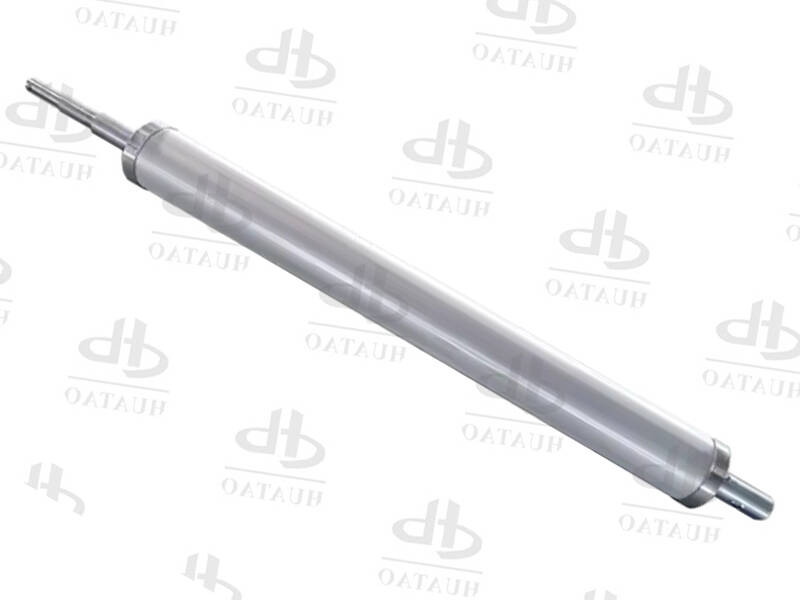
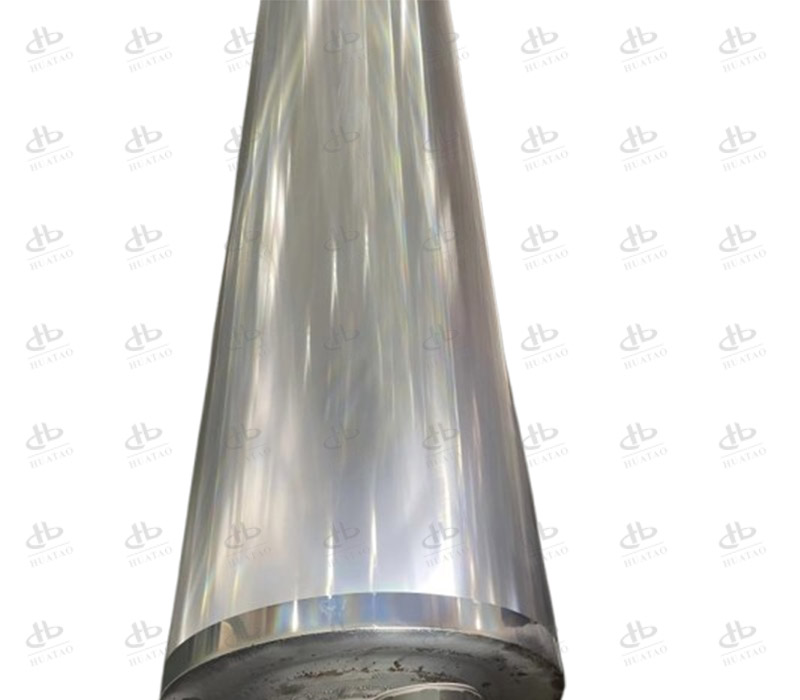
Electromagnetic induction heating roll is a self-heating cylindrical core equipment specially used for continuous processing of various industrial substrates such as polymer film, carbon fiber, prepreg and paper. Its core heating principle depends on built-in induction coils. After being energized, alternating electromagnetic fields are generated, and magnetic lines cut the metal roll shell to produce uniform Joule heat inside the roll body. A complete closed-loop temperature control system is equipped to stabilize the roll at the set temperature value, so as to realize stable heat exchange with passing materials.
This type of heating roll is widely applied in PVC forming, chemical fiber spinning, composite lamination, material drying and inorganic film stretching production procedures. Compared with traditional thermal oil and water heating rolls, it has prominent advantages in temperature uniformity, environmental protection and operation safety, and has become an indispensable heating component for high-temperature and high-precision material manufacturing. The only limitation is its higher one-time manufacturing cost than oil heating rolls, which restricts its full popularization in the market at this stage.
2 Two Main Structural Classification of Induction Heating roll
According to different supporting structures at both ends, induction heating rolls are divided into single-shaft type and double-shaft type to adapt to diversified production process demands.
2.1 Single-shaft Induction Heating roll
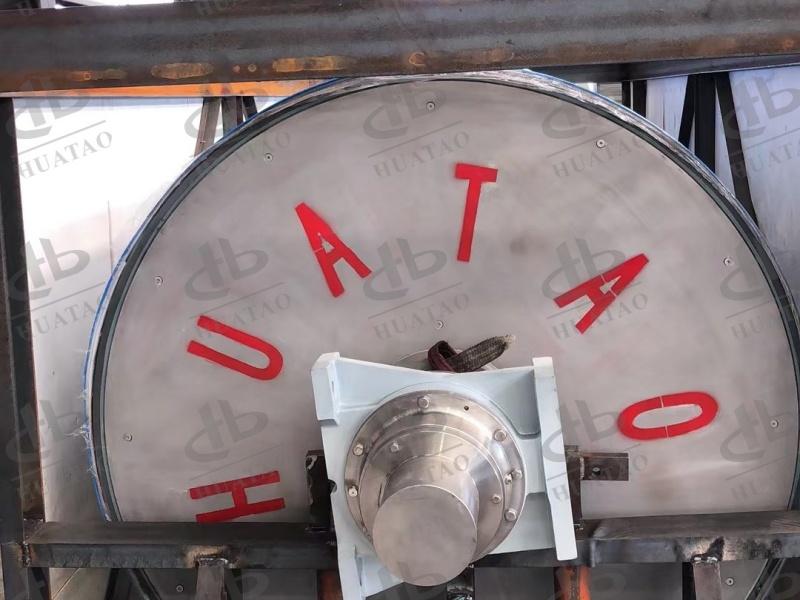
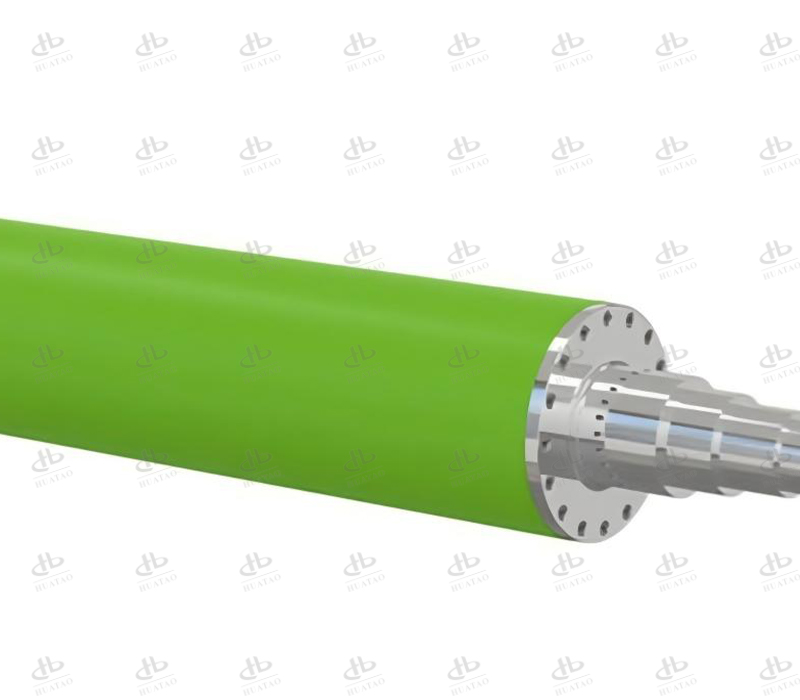
This product is supported only by one end, and is mostly applied in chemical fiber spinning equipment, as well as drying and stretching production lines of special plastic films. It can be manufactured into integrated structure, split structure or integrated structure matched with driving motor. The standard assembly consists of induction coil group, roll shell, transmission support assembly and temperature detection components.
2.2 Double-shaft Induction Heating roll
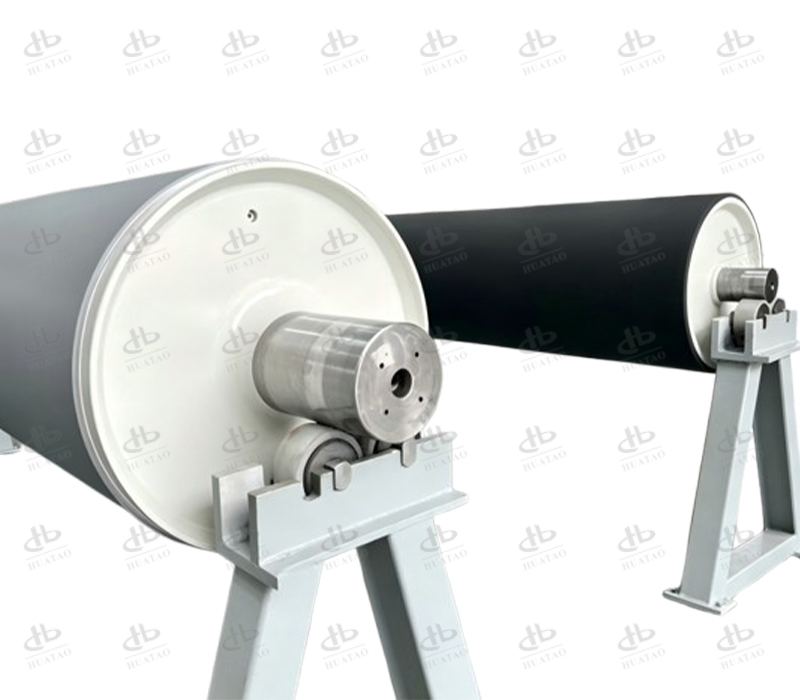
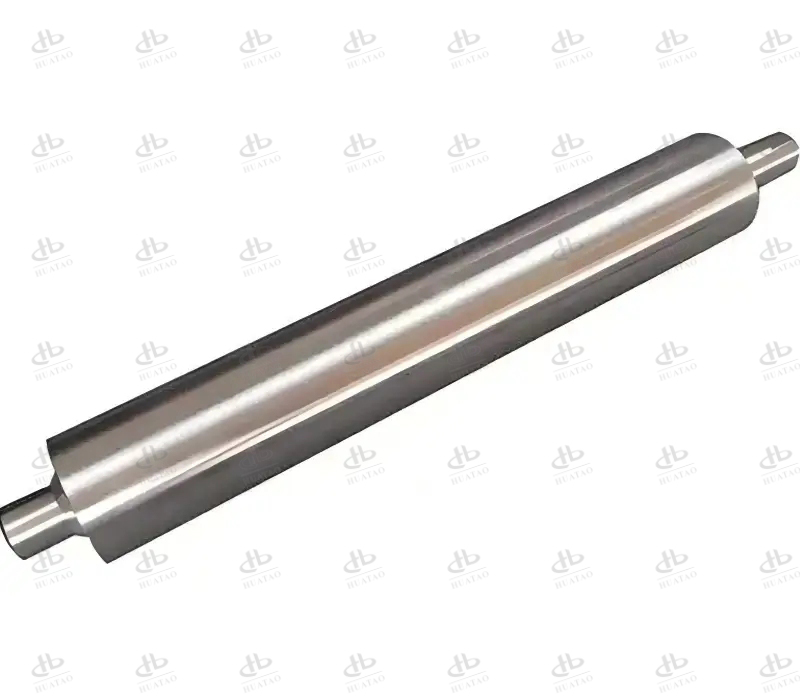
The double-shaft roll is supported at both ends, equipped with left and right end covers, built-in heating coils and temperature sensing devices. It has a wider range of applicable scenarios, including calendering, surface polishing, material leveling, drying, composite pressing, thermoforming and heat transfer printing.
In terms of internal heating layout, there are two technical routes: built-in coil heating and external coil heating. The built-in coil scheme occupies the absolute mainstream position in the industry due to higher heating efficiency, better safety and more accurate temperature control, and more than 99% of industrial products adopt single built-in coil layout. The products developed by our factory adopt this mature design consistent with Japan’s Tokuden brand.
3 Multi-mode Temperature Detection and Signal Transmission System
3.1 Two Types of Temperature Measurement Methods
- Direct contact temperature measurement K-type thermocouple or PT100 resistance sensors are embedded inside the rollwall to collect real-time temperature data. Among them, K-type thermocouple has lower component cost but needs to be matched with special compensation wires; PT100 sensor has higher data stability with slightly higher procurement cost.
- Indirect non-contact temperature measurement
- Infrared temperature measurement: Based on blackbody radiation principle, it is easily interfered by rollsurface roughness, surface dirt, detection distance and angle, resulting in obvious measurement errors.
- Air temperature measurement: Mainly used for split single-shaft rolls in chemical fiber workshops. Sensors are placed in reserved grooves on the rollend face to detect air temperature changes, and the control system adjusts coil current through PID algorithm to stabilize heating power.
3.3 Three Common Temperature Measuring Positions
- Air temperature measurement: Widely adopted in chemical fiber stretching production lines
- rollwall temperature measurement: Drill detection holes of different lengths on the roll barrel for deep temperature collection
- rollsurface temperature measurement: Realized by infrared or contact thermocouple, with poor stability and rarely used in formal mass production
3.4 Two Signal Transmission Modes
- Direct signal transmission: The original signals of thermocouple and PT100 are directly transmitted to the PLC temperature controll
- Converted signal transmission: The original temperature data is converted into standard 4-20mA industrial signals before output, which supports wired and wireless transmission. Wireless transmission is not recommended for rotating rolls due to the need for independent battery power supply.
4 Comprehensive Performance Comparison Between Induction Heating roll and Thermal Oil Heating roll
| Comparison Dimension | Electromagnetic Induction Heating roll | Thermal Oil / Electric Heating roll |
| Surface Temperature Uniformity | Temperature deviation controlled within ±0.5~1℃ | Surface temperature difference exceeds ±4℃ |
| Temperature Control Precision | Full digital PLC closed-loop control with high regulation accuracy | Long oil pipeline leads to large temperature difference between two ends, difficult to adjust flexibly |
| Maximum Sustainable Temperature | Stable operation up to 400℃ | Maximum working temperature limited to 240℃ |
| Thermal Energy Utilization Rate | Over 95% heat efficiency, power consumption reduced by up to 60% | Only about 60% heat utilization rate with serious energy loss |
| Heating Acceleration Speed | Rise to 200℃ within 30 minutes | It takes 90 minutes to reach 200℃ |
| Remote Control Function | Reserved communication interface for remote data viewing and parameter adjustment | No built-in remote control module |
| Production Environment Impact | Oil-free and pollution-free, clean workshop operation | Thermal oil leakage and volatilization risks exist, with potential fire hazards |
| Operational Safety | Internal magnetic heating structure, stable and reliable long-term operation | Oil pipelines are easy to block, causing unexpected production shutdown |
| Floor Space Requirement | No external supporting pipelines, compact overall structure | Matching oil temperature machine and complex pipelines occupy large workshop area |
| Average Service Life | Stable operation for more than 10 years | Average service life only 3 to 5 years |
| Procurement Cost | Higher initial investment cost | Low upfront purchase price |
5 Customized Heating roll Matching Service
For manufacturers engaged in plastic film, non-woven fabric, carbon fiber, prepreg, industrial paper and composite material production, our engineering team can design exclusive electromagnetic induction heating roll solutions according to the actual production line speed, target working temperature and installation size limits of customers.
Contact Information
Jenny Liu WhatsApp / Mobile: +86 17743789775 Email: sale05@huataogroup.com Official Product Page: https://www.huataorolls.com/induction-heating-roll

 Related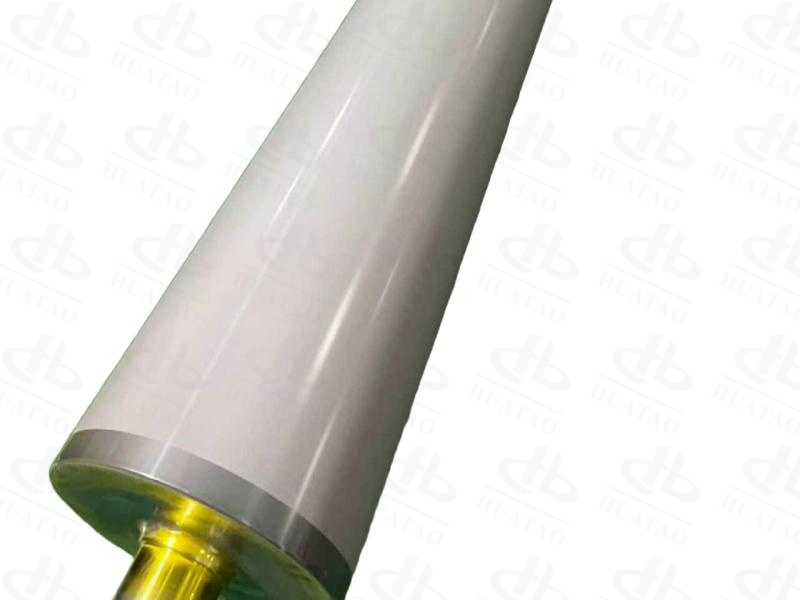
.jpg)




Excellent Service Each and Every Time